

DENTAL CARIES TREATMENT
Cavity Treatment
We assess the depth of the cavity and the condition of the tooth,
then plan treatment that preserves your natural tooth.
Cavity Treatment in Daejeon | Seoul Standard Dental Clinic
You are viewing the English website of
Seoul Standard Dental Clinic.




We assess the depth of the cavity and the condition of the tooth,
then plan treatment that preserves your natural tooth.
A cavity is damage to the tooth caused by acids
that oral bacteria produce while breaking down
sugars from food.
There may be no pain at first, but once decay
reaches the dentin and the nerve, sensitivity and
pain appear, and root canal treatment or a crown may be needed.
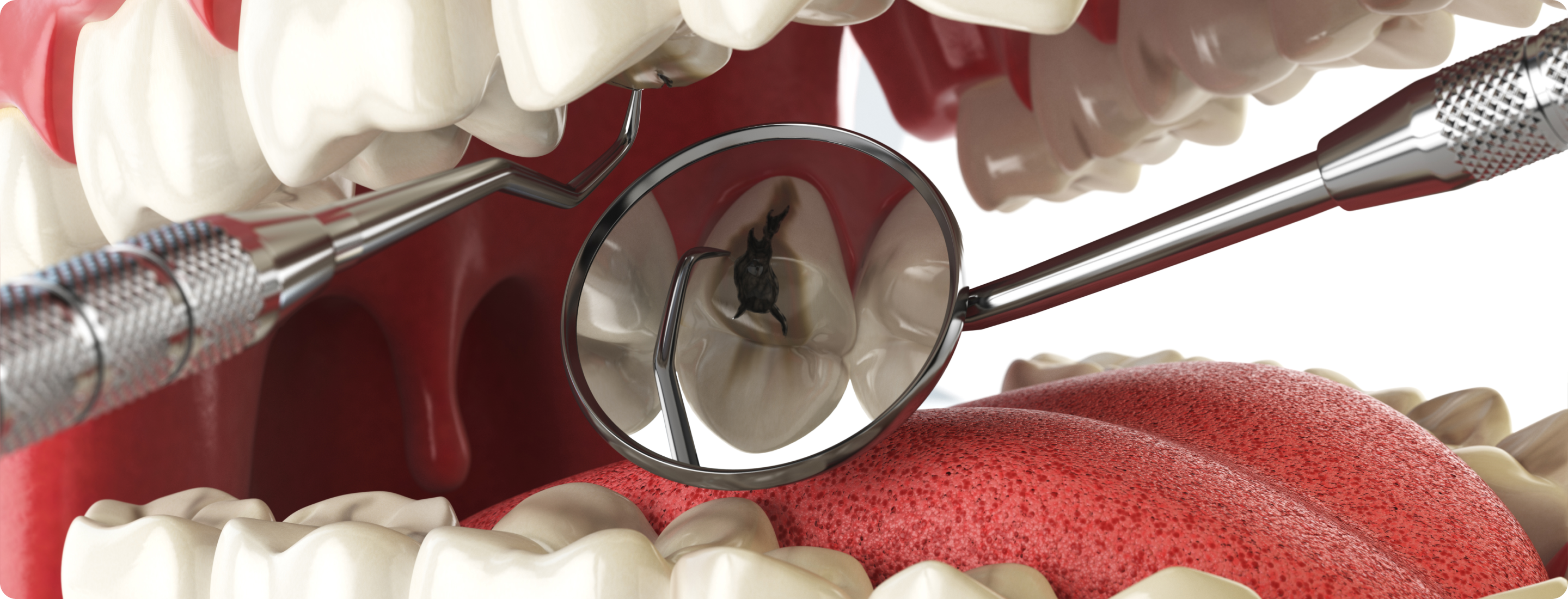
We assess the depth of the cavity and the extent of damage,
then choose the treatment that fits the stage, preserving natural tooth structure first.
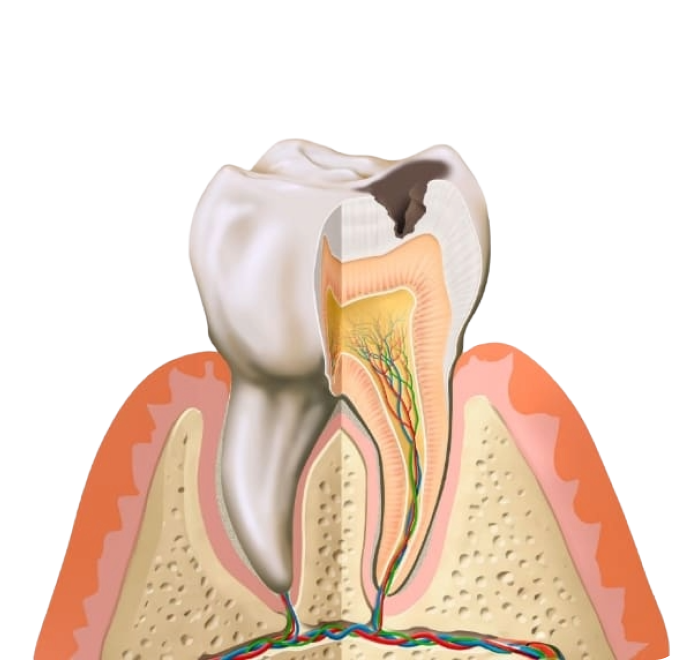
Begins as subtle discoloration that is
easy to miss. There is no pain, but treating it
now is the simplest way to keep the tooth intact.
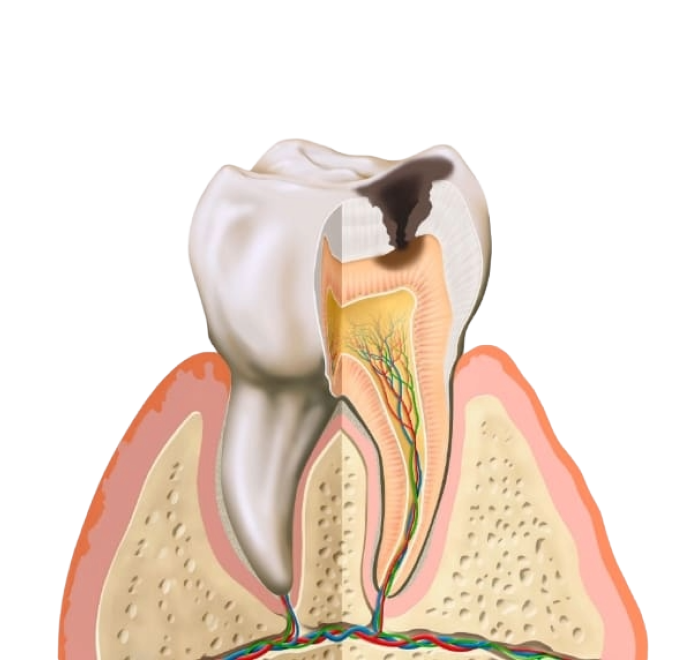
The tooth may be sensitive to cold or sweet foods.
Damage has already reached the inside of the tooth,
so prompt treatment is needed.

Once bacteria reach the nerve, pain becomes
severe and may throb at night.
Root canal treatment is needed at this stage.
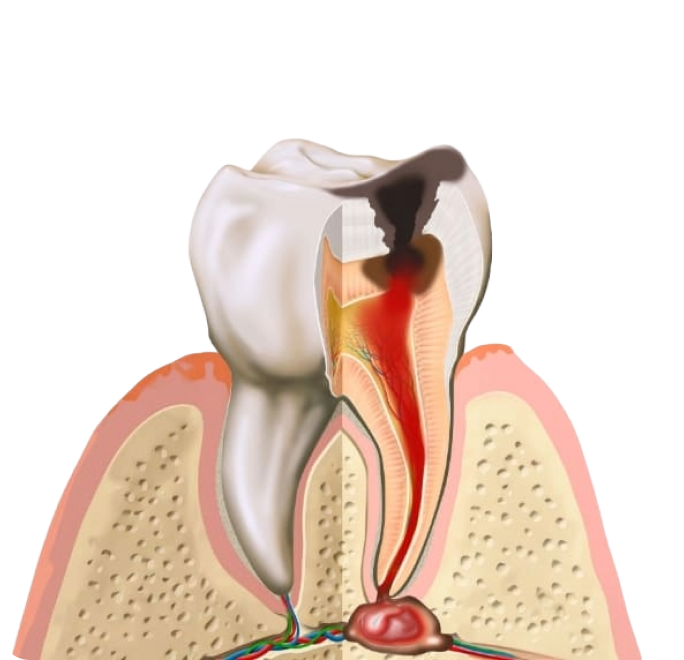
The nerve inside the tooth is completely damaged
and infection spreads to the root. In severe cases,
extraction followed by an implant may be needed.
Considering the extent of decay, the tooth's position and chewing forces,
we select the restoration that will protect the tooth reliably.
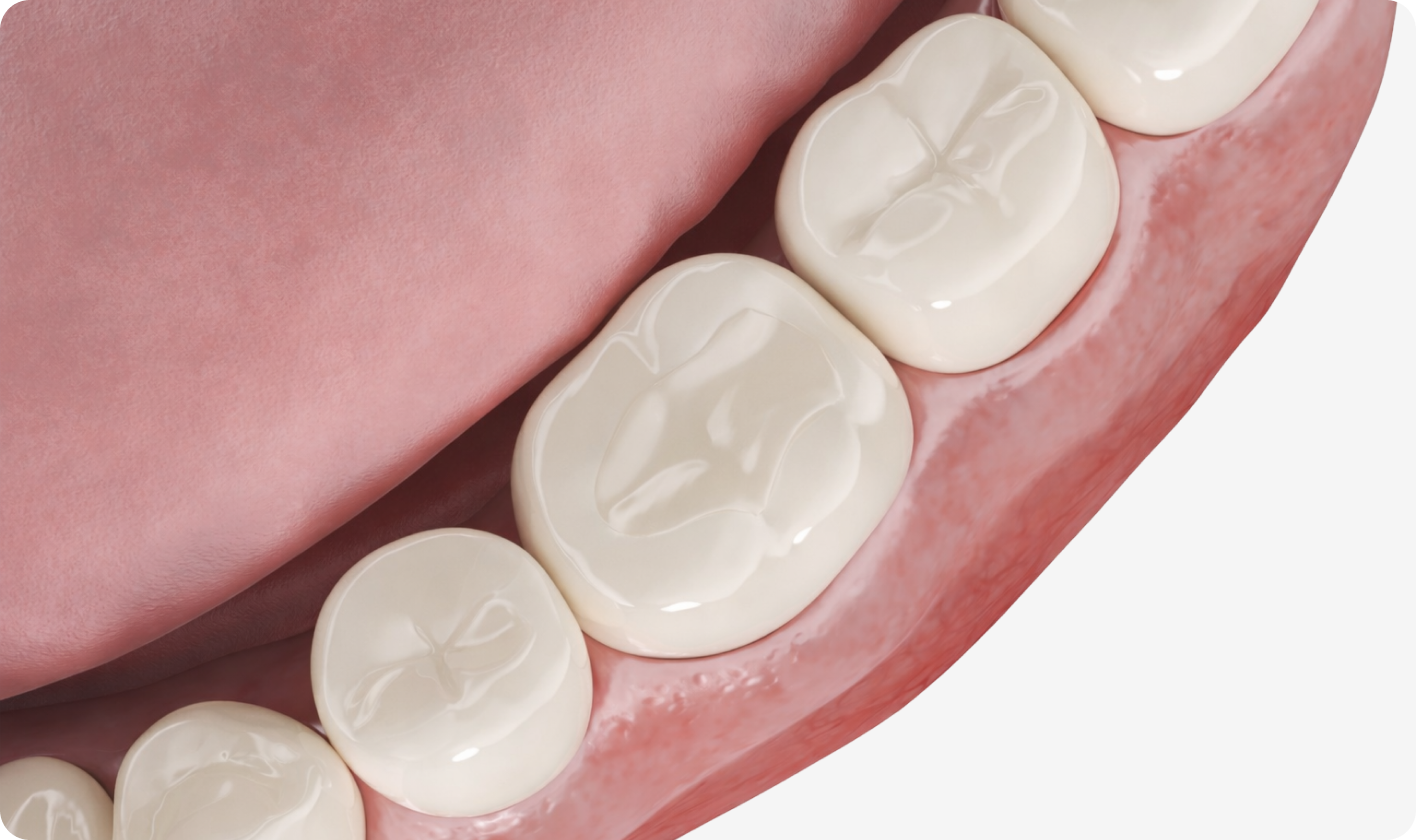
For small areas of damage, a tooth-colored composite resin
allows simple cavity treatment.

When a larger area of the tooth must be removed, an impression is taken and a custom inlay is bonded in place.
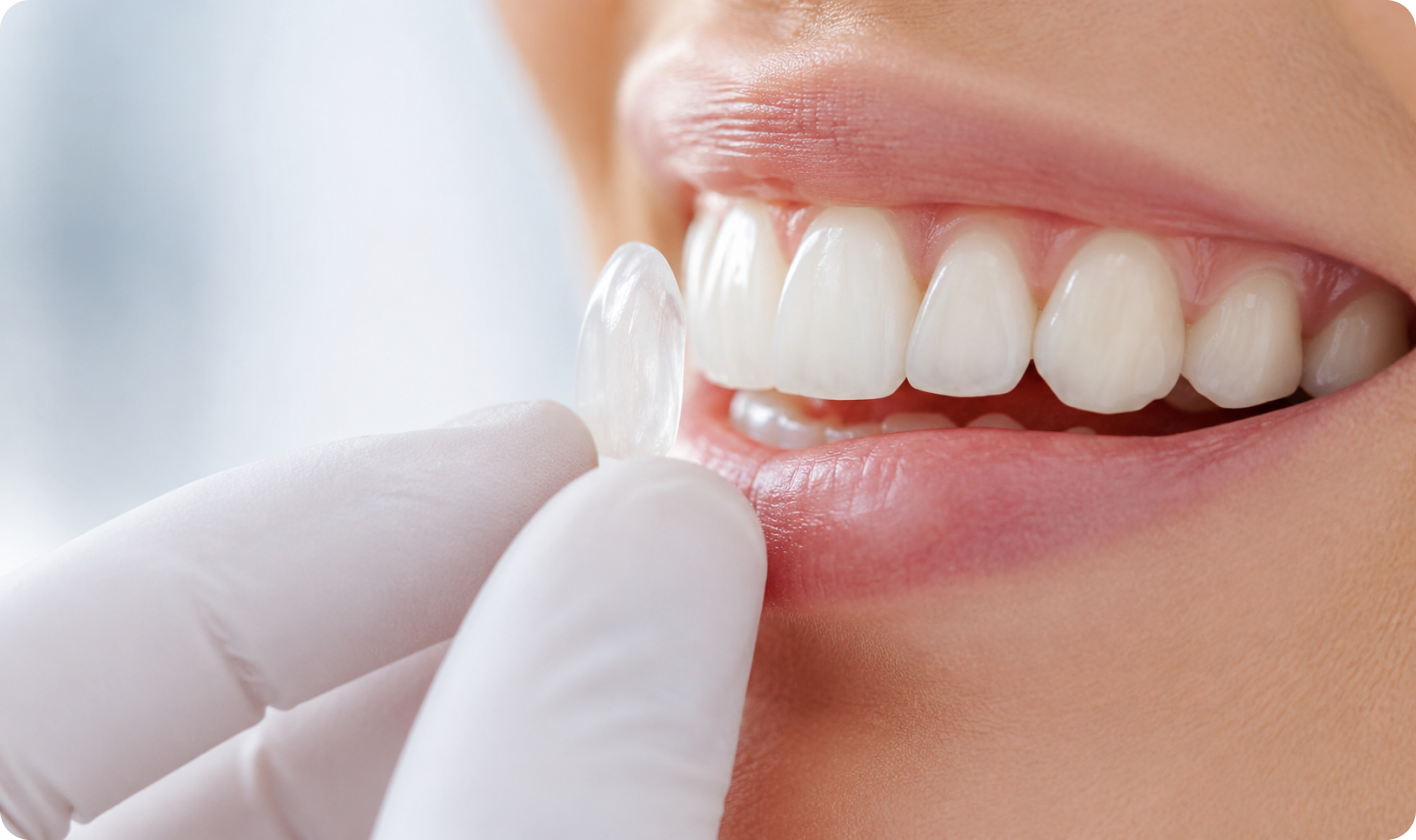
A dental crown covers and protects a tooth weakened after root canal treatment.

When the tooth cannot be saved, it is extracted and replaced with an implant
that closely matches a natural tooth in function and appearance.
To keep your treated tooth healthy for a long time,
please review these aftercare instructions and care tips.

While numb, you could bite your cheek or tongue or burn yourself on hot food,
so please wait until feeling has fully returned before eating.
Right after treatment, avoid chewy, hard or sticky foods
so the treated tooth is not put under heavy force.
The tooth may be sensitive to cold or hot foods for a few days after treatment.
This usually fades, but if it gets worse, please come in for an examination.
If the treated tooth touches first when you bite or hurts when you chew,
do not wait it out. Visit us so we can check your bite and the tooth.
Answers to the questions patients most often ask
before visiting Seoul Standard Dental Clinic.
Early cavities may cause no symptoms at all.
Whether treatment is needed is decided after examining whether the decay is active and whether the tooth surface is actually damaged.
Early decay where the tooth surface has not broken down can be monitored with fluoride treatment and good oral care.
If a hole has already formed or the decay is likely to progress, a restoration may be needed.
Composite resin is placed directly into the tooth and shaped in the mouth, and is used for relatively small cavities.
An inlay is a restoration made separately to fit the tooth and then bonded in place, and is considered for relatively larger cavities.
Depending on the depth of the cavity and the extent of treatment, local anesthesia is used when needed.
Cavities close to the nerve may cause temporary sensitivity or discomfort after treatment.
Amalgam and glass ionomer (GI) fillings are covered regardless of age, and light-cured composite resin is covered only for permanent teeth in patients aged 12 and under (source: Ministry of Health and Welfare, Health Insurance Review and Assessment Service).
Adult composite resin and inlays are not covered. At Seoul Standard Dental Clinic, composite resin is KRW 100,000 (simple), KRW 150,000 (front tooth) and KRW 70,000 (cervical), and a hybrid inlay is KRW 320,000 (prices as of 2026-08-17, confirmed by the Director).
No.
Sensitivity is very often caused by a notch at the gumline or by gum recession exposing the root, and teeth grinding or hard horizontal brushing is a common underlying cause.
Because treatment depends on the cause, we identify it first rather than drilling right away just because a tooth is sensitive.
Dentists differ in how they distinguish active decay from arrested decay (stained but inactive lesions), and in whether they treat now or watch and wait.
Our policy is to review the diagnostic evidence (X-rays and intraoral photos) with you and clearly separate the teeth that need treatment from those that will be monitored.
We examine each patient carefully and
honestly recommend only the treatment that is needed.
From diagnosis to aftercare,
we practice dentistry by the book.

Six dentists organized by specialty care for you
from start to finish within a structured system.

Our comfort anesthesia and sedation dentistry systems
help reduce the pain and fear of dental treatment.
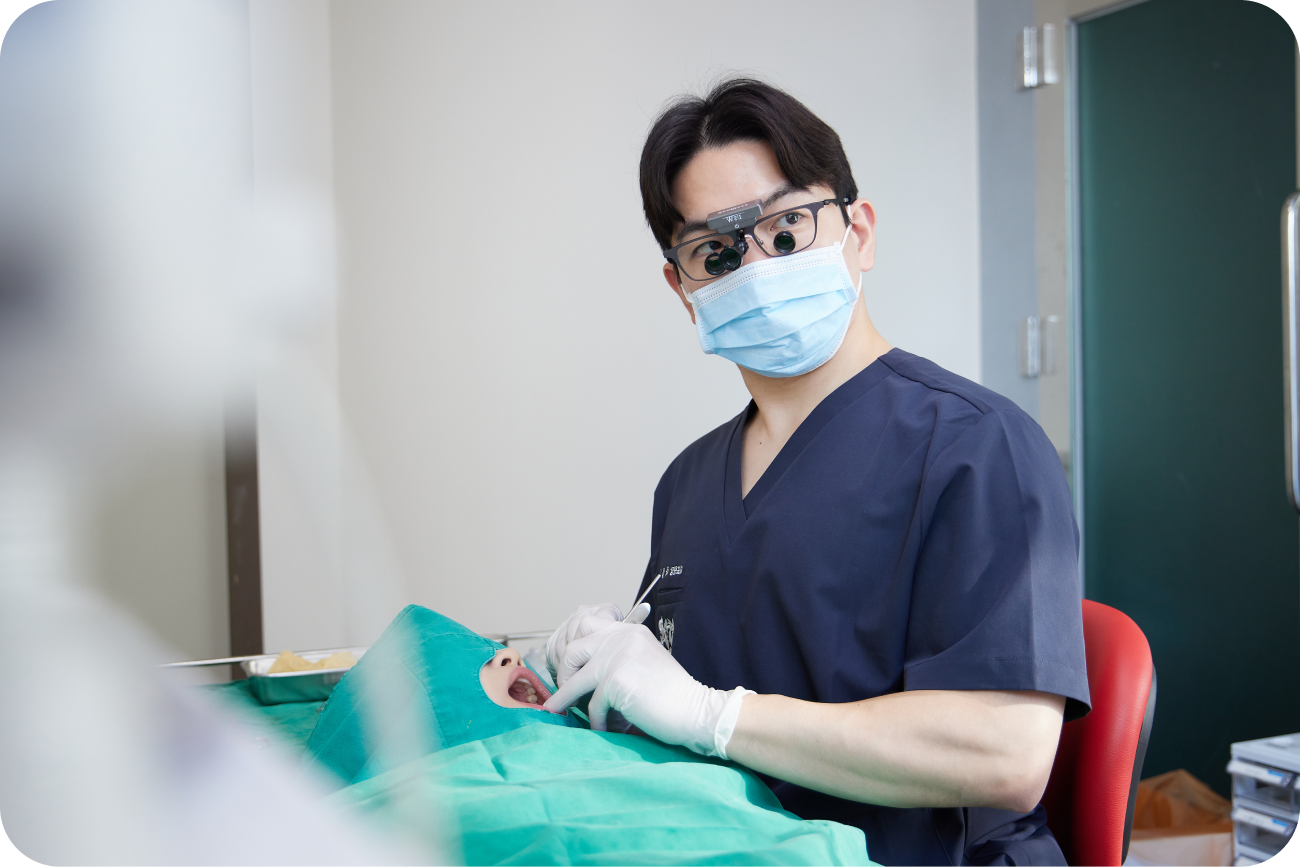
With more than 20,000 cases treated,
we keep practicing by the book across every area of dentistry.
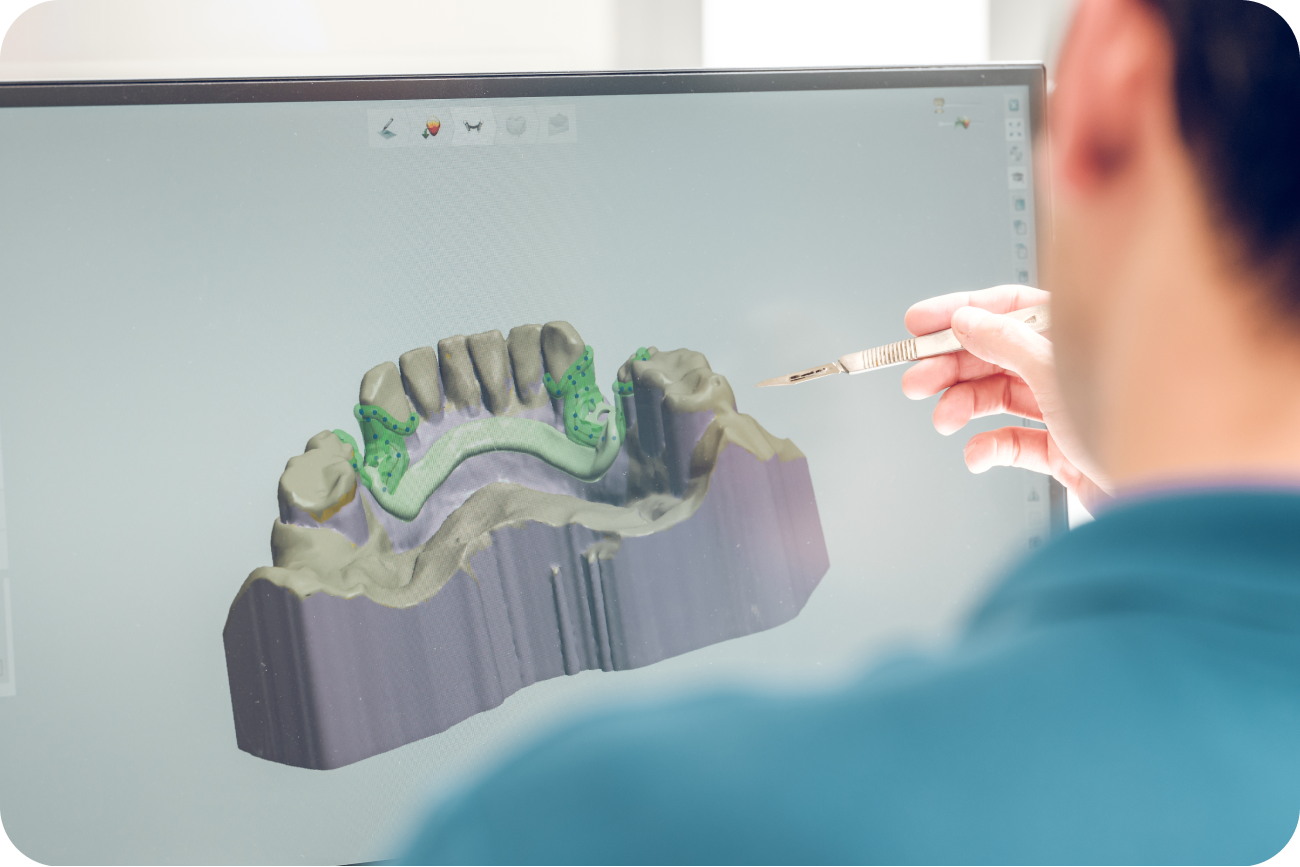
Digital diagnostic and monitoring equipment lets us examine your condition in detail
and provide more accurate, stable treatment.
Seoul Standard Dental Clinic has evening hours
until 8:30 PM on Tuesdays and Thursdays.




+82-42-823-2279

4F, 511-7 Doan-daero, Yuseong-gu, Daejeon, South Korea
(474-3 Sangdae-dong)

Underground parking in the building (limited space)
Doan public parking lot behind the building (parking fee covered for the length of your visit)

9:30 AM to 6:30 PM
9:30 AM to 8:30 PM
Evening hours
9:30 AM to 2:00 PM
12:30 to 2:00 PM
*Saturday: open through lunch
*Closed Sundays and public holidays
*Last check-in is 30 minutes before closing


