

WISDOM TOOTH EXTRACTION
Wisdom Tooth Extraction in Daejeon
We precisely check the position and shape of the wisdom tooth and its distance
from the nerve,
then plan the extraction around the condition of your mouth.
Wisdom Tooth Extraction in Daejeon | Seoul Standard Dental Clinic
You are viewing the English website of
Seoul Standard Dental Clinic.




We precisely check the position and shape of the wisdom tooth and its distance
from the nerve,
then plan the extraction around the condition of your mouth.
Wisdom teeth are the third molars, the last teeth to come in
at the very back of the mouth, usually erupting in the late teens
to early twenties.
With enough room in the jaw they can come in normally,
but when space is short they can stay buried in the gum
or jawbone or tilt sideways, becoming impacted wisdom teeth.
Food and bacteria collect easily around an impacted wisdom tooth,
which can lead to inflammation, decay and damage
to the neighboring tooth.
A wisdom tooth that has come in straight, works for chewing,
can be brushed well and has no inflammation or decay
can simply be monitored at regular checkups.
On the other hand, extraction is considered when there is repeated pain or inflammation,
when the tooth is damaging its neighbor,
or when pathological changes are found around it.
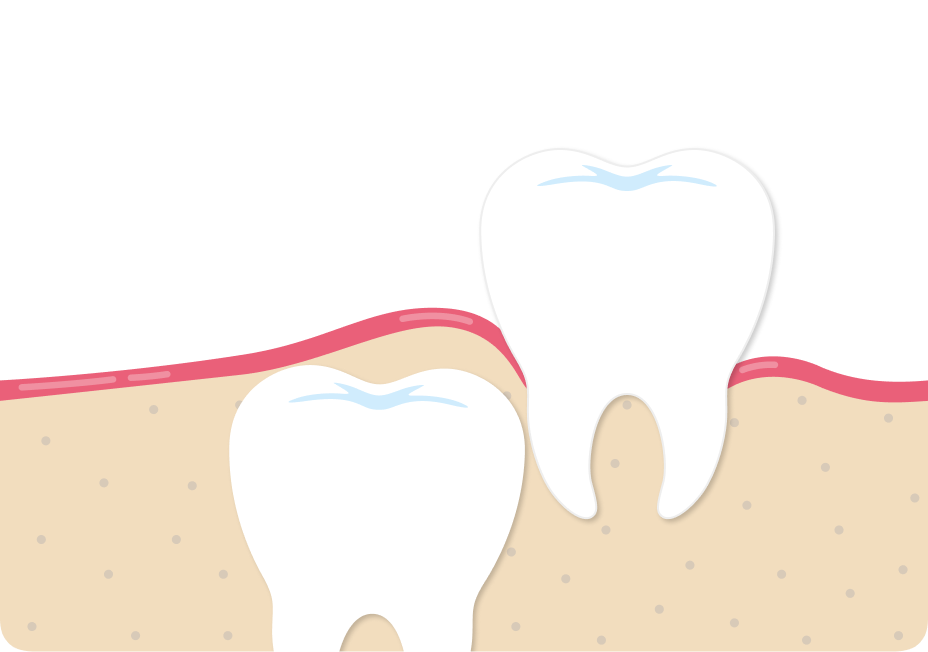
Even a wisdom tooth that came in straight can be hard to clean;
if decay or inflammation develops, extraction may be needed.
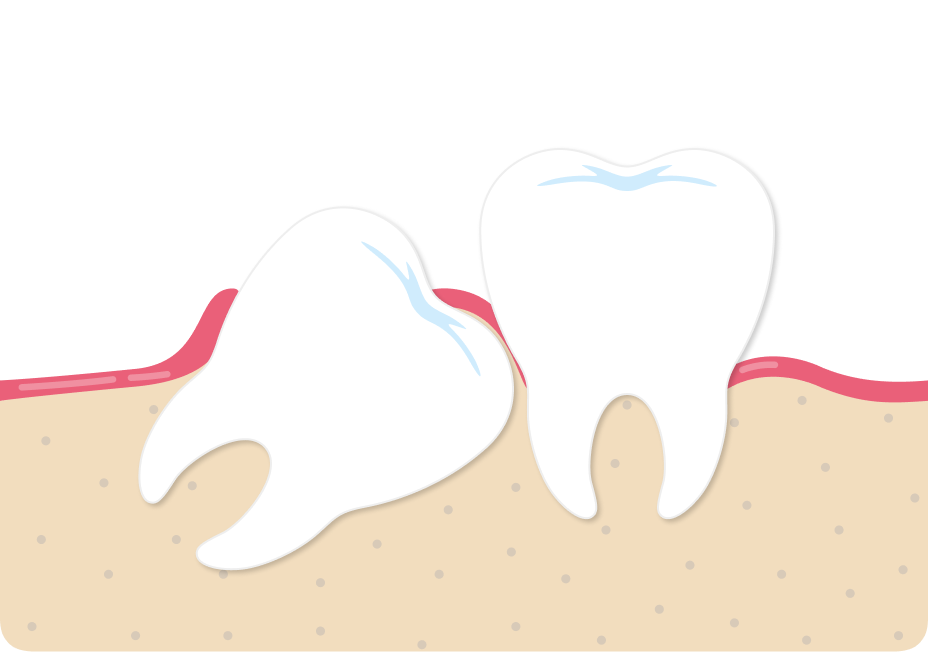
It can push on the molars and make the teeth crooked,
and traps food easily, raising the risk of decay and inflammation.
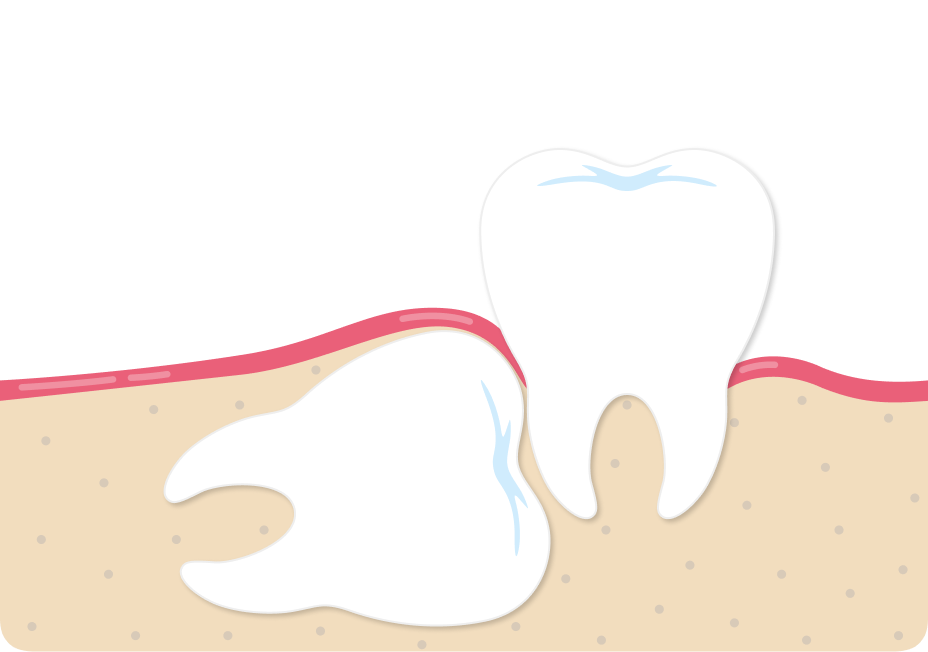
It can damage the molar roots or nerve and cause inflammation
and pain, so extraction is needed.
We precisely check the impaction depth and angle of the wisdom tooth
and its position relative to the nerve,
then carry out the extraction step by step
according to a plan suited to your mouth.
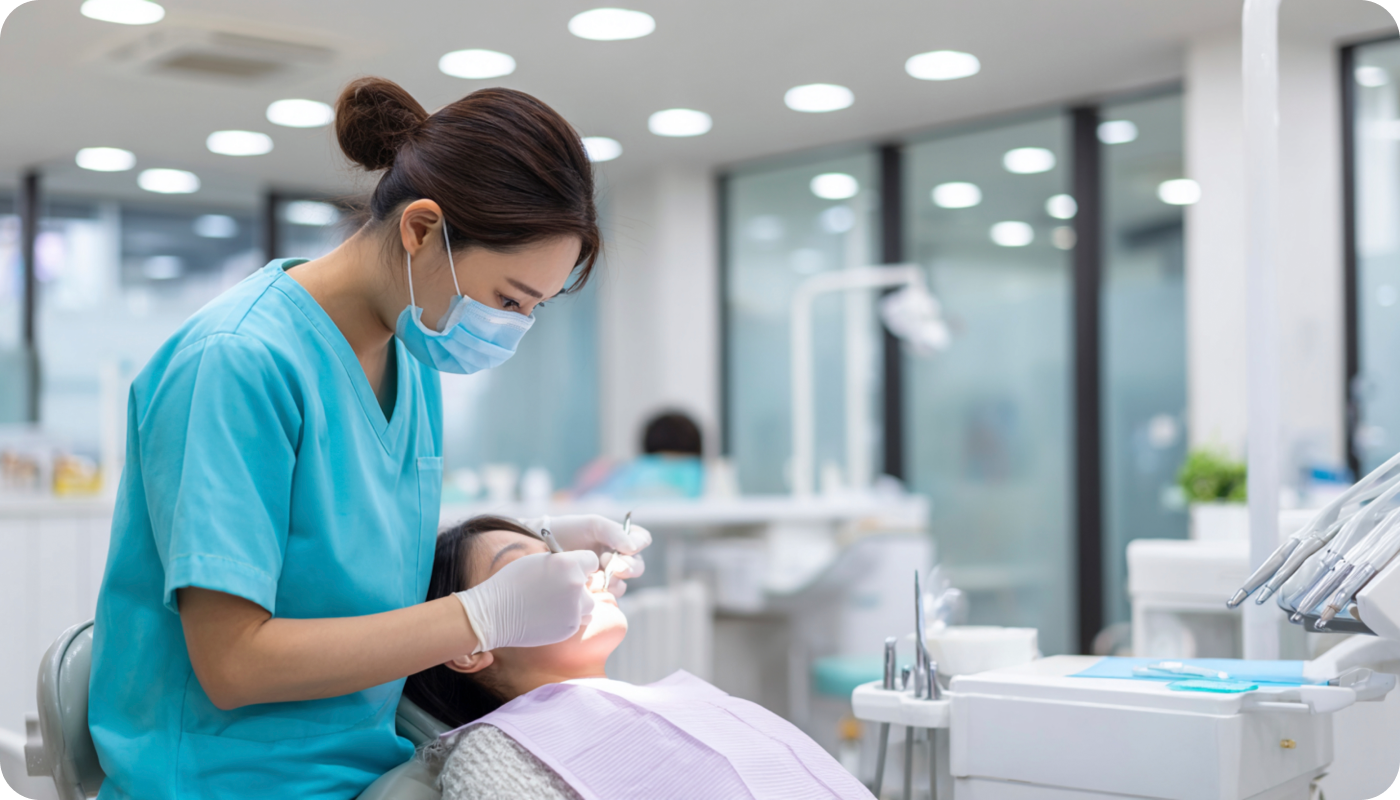
We check for pain and inflammation, any medications you take and your general health.
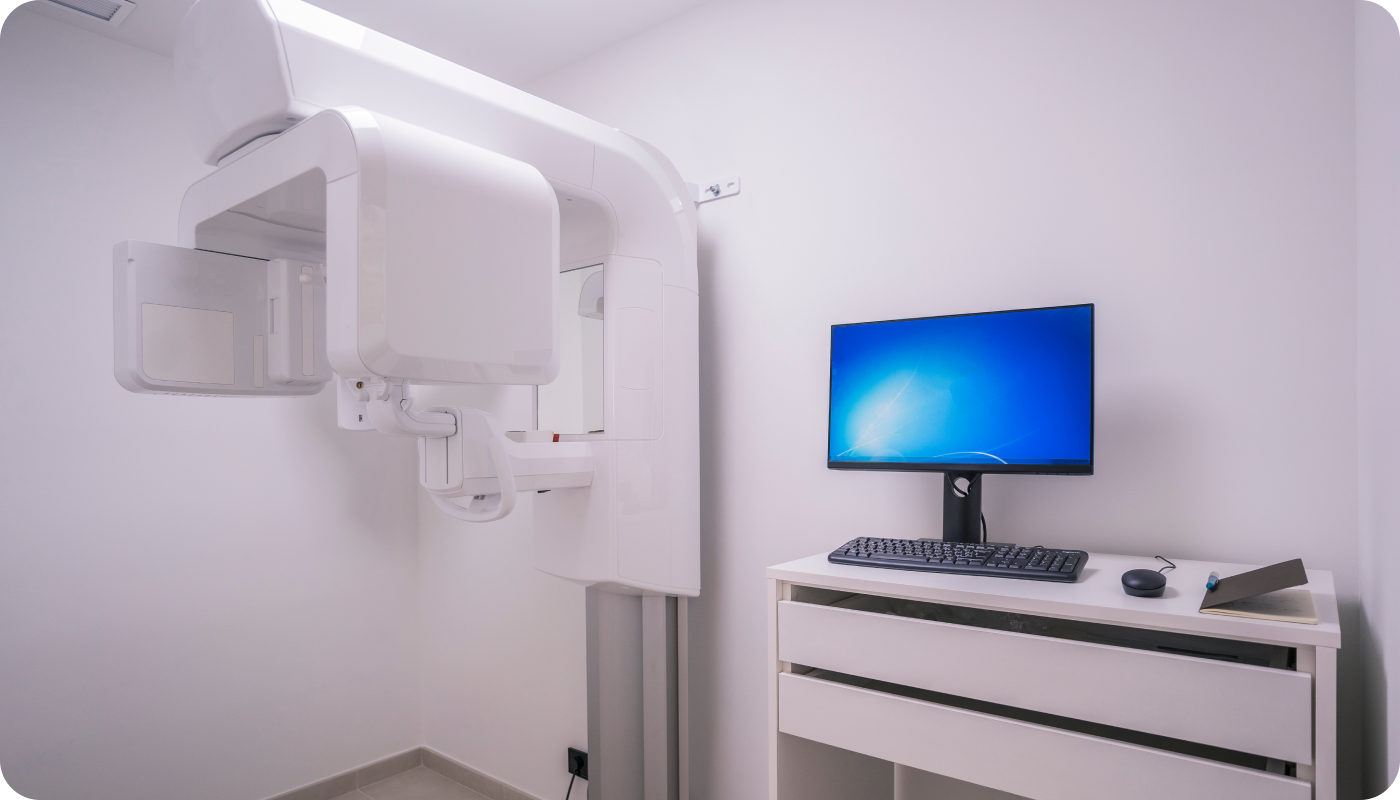
We check the angle and impaction depth of the wisdom tooth and the position of its roots relative to the nerve canal.
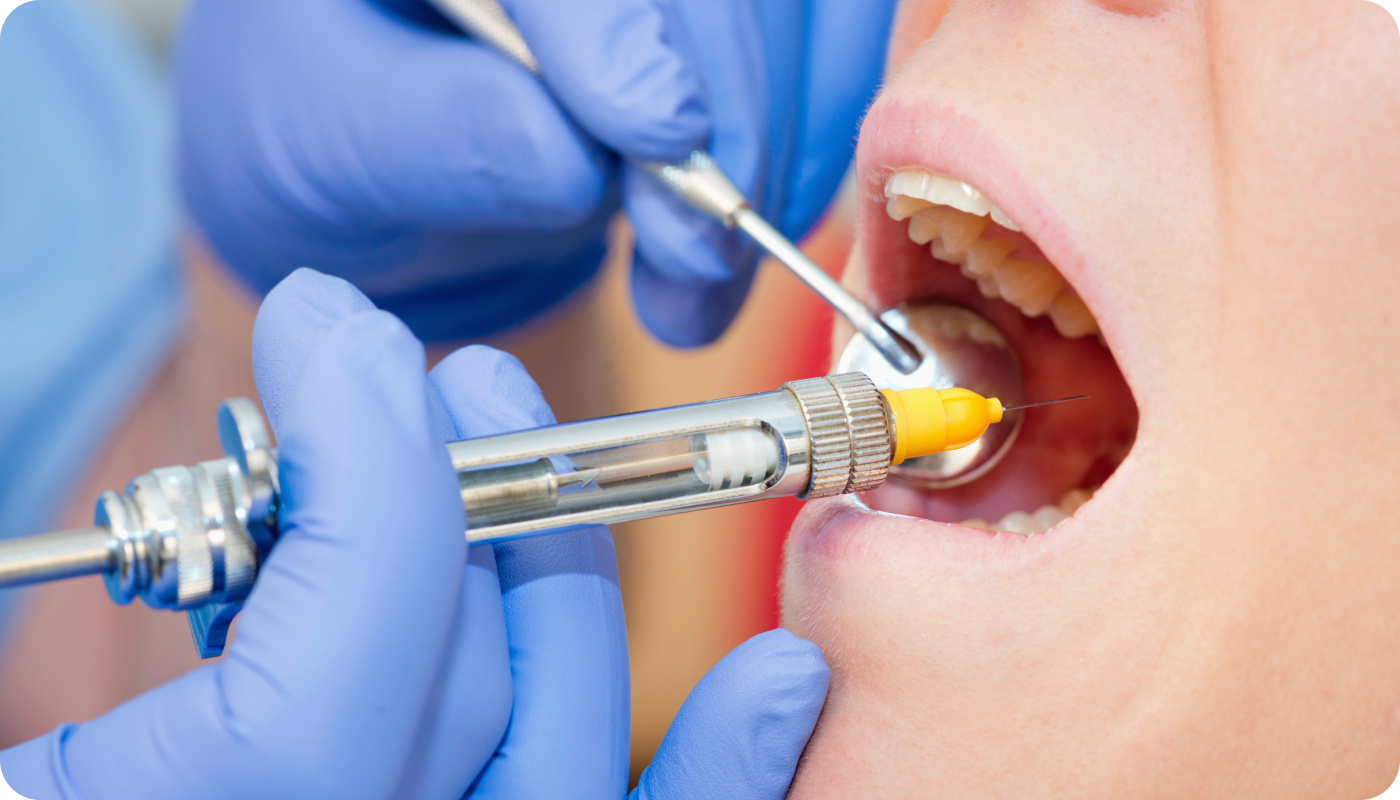
Local anesthesia is given at the extraction site, and we confirm it has fully taken effect.

For an impacted tooth, the gum is opened if needed
and the tooth is sectioned to limit damage to the surrounding tissue as it is removed.

The extraction site is irrigated and sutured as needed
so the tissue can heal in a stable way.
Not every wisdom tooth has to be removed,
but when it causes problems like these, a proper examination
and extraction may be needed.

If you have a strong fear of dental treatment, or removing several wisdom teeth feels like too much,
conscious sedation can be used after checking your general health.
Learn more about sedation dentistry

The blood clot that forms at the extraction site needs to stay in place
for the gum to heal well.
Please follow the instructions you were given
to prevent bleeding and infection.

Keep pressure on the gauze for the time you were told.
Swallow blood and saliva rather than spitting; this helps stop the bleeding.
Rinsing hard, spitting forcefully or using a straw can dislodge the clot
at the site and cause bleeding or dry socket.
Do not touch the site with your fingers or tongue,
and take care not to brush directly on the wound.
Avoid hot, spicy or hard foods; choose lukewarm, soft foods and chew slowly on the other side.
Alcohol, smoking, saunas and strenuous exercise can cause bleeding and delay healing,
so avoid them for the period you were advised.
Take the prescribed medication as directed. If bleeding does not stop
or pain and swelling keep increasing, contact the clinic.
Browse the questions patients most often ask
before visiting Seoul Standard Dental Clinic.
Local anesthesia is given before the extraction, which helps reduce pain during the procedure.
After it wears off, pain and swelling can occur and are managed with the prescribed medication.
Depending on their position, degree of impaction and your general health, several can be removed in one visit.
To limit difficulty with eating and recovery, they are sometimes removed in separate visits.
It varies with the difficulty of the extraction and how you recover.
Swelling and pain are common for a few days after extraction and gradually ease over time.
When a panoramic X-ray shows the roots close to the nerve canal, a 3D CT scan can be used to confirm their relationship.
Based on the results, we explain the extraction method and the possibility of nerve injury in detail before deciding on treatment.
Wisdom tooth extraction is covered by National Health Insurance, with fees graded by difficulty: simple, complex and fully impacted.
A CT scan for a high-risk wisdom tooth whose roots overlap the nerve canal is also covered when the coverage criteria are met (source: Health Insurance Review and Assessment Service).
Non-covered items such as conscious sedation (KRW 300,000) are explained, with amounts, before the procedure (prices as of Aug 17, 2026, confirmed by the clinic director).
Seoul Standard Dental Clinic extracts most wisdom teeth in-house, including impacted ones.
We refer to an oral and maxillofacial surgery department when a cyst or a lesion requiring biopsy is present, or when the roots wrap around the nerve and the risk of nerve injury is high (confirmed by our director, Aug 2026).
We have performed 12,946 wisdom tooth extractions to date (website figure, August 2026).
In normal healing, pain eases after 2 to 3 days.
If pain gets worse 3 to 4 days after extraction and there is a bad odor or sour taste, dry socket is suspected, where the blood clot has come loose and bone is exposed; return to the clinic that did the extraction.
There is no way to treat it at home; it is managed with irrigation and dressing. Smoking, straws and forceful rinsing raise the risk.
We look closely at each patient's condition
and honestly recommend only the treatment that is needed.
From diagnosis to aftercare,
we practice dentistry by the fundamentals.

Six dentists organized by specialty area provide care
from start to finish within a structured system.

Comfort anesthesia and sedation dentistry
help reduce the pain and fear of dental treatment.
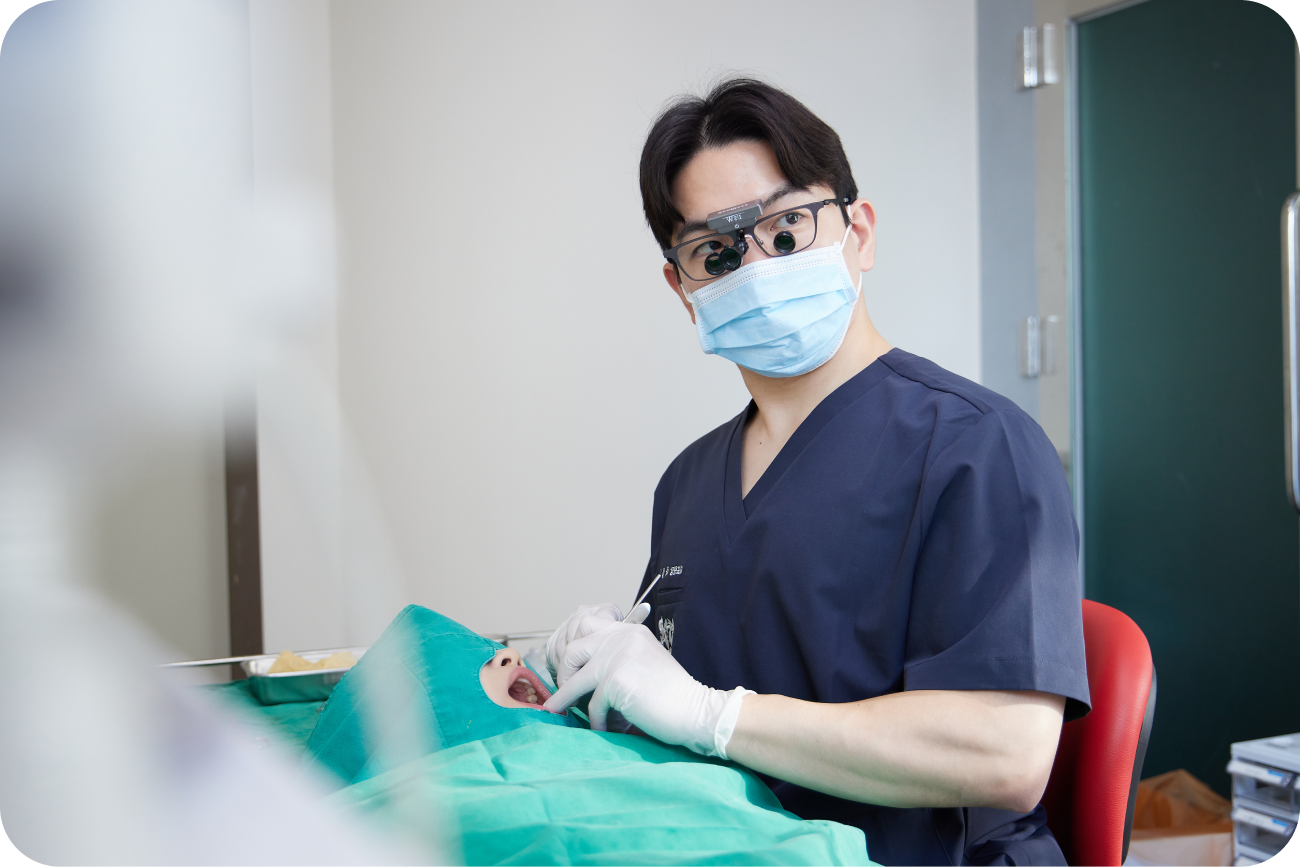
Drawing on more than 20,000 treatments,
we practice dentistry by the standard across a wide range of fields.
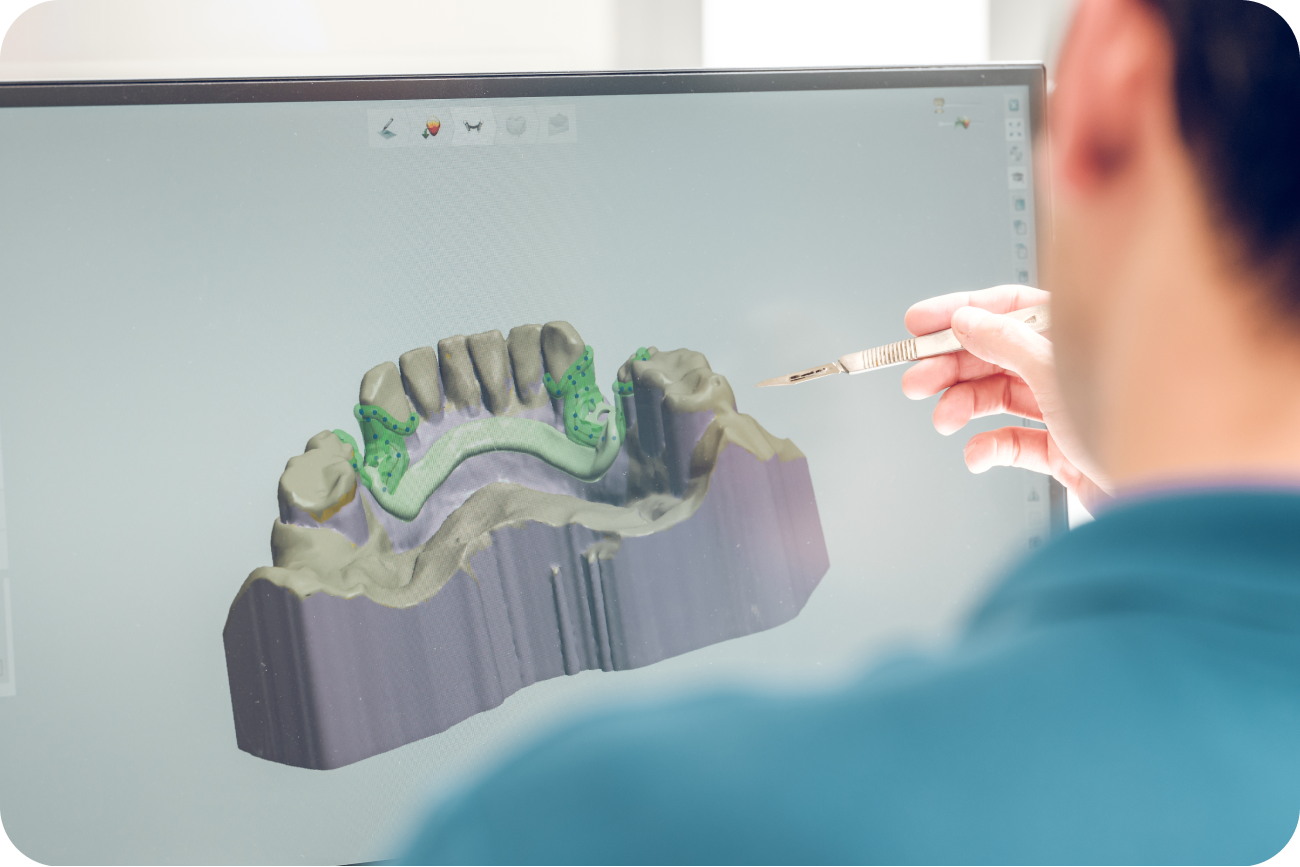
Digital diagnostic and monitoring equipment lets us examine each patient closely
and deliver more accurate, stable care.
Seoul Standard Dental Clinic has evening hours
until 8:30 PM on Tuesdays and Thursdays.




+82-42-823-2279

4F, 511-7 Doan-daero, Yuseong-gu, Daejeon, South Korea
(474-3 Sangdae-dong)

Underground parking in the building (limited space)
Doan public parking lot behind the building (parking fee covered for the length of your visit)

9:30 AM to 6:30 PM
9:30 AM to 8:30 PM
Evening hours
9:30 AM to 2:00 PM
12:30 to 2:00 PM
*Saturday: open through lunch
*Closed Sundays and public holidays
*Last check-in is 30 minutes before closing


