

TMJ TREATMENT
TMJ Treatment
We assess the jaw joint, the surrounding muscles and your daily habits together,
then build a step-by-step treatment plan matched to the cause of the pain.
TMJ Treatment in Daejeon | Seoul Standard Dental Clinic
You are viewing the English website of
Seoul Standard Dental Clinic.




We assess the jaw joint, the surrounding muscles and your daily habits together,
then build a step-by-step treatment plan matched to the cause of the pain.
The temporomandibular joint sits just in front of the ear, connecting the lower jaw to the skull,
and moves whenever you open and close your mouth or chew.
TMJ disorder is a condition in which problems with the joint, its disc
or the surrounding chewing muscles cause symptoms such as jaw pain,
joint sounds and limited mouth opening.
Teeth grinding and clenching, resting your chin on your hand, overusing the jaw,
injury and stress can all combine to play a part,
so an accurate diagnosis is important.
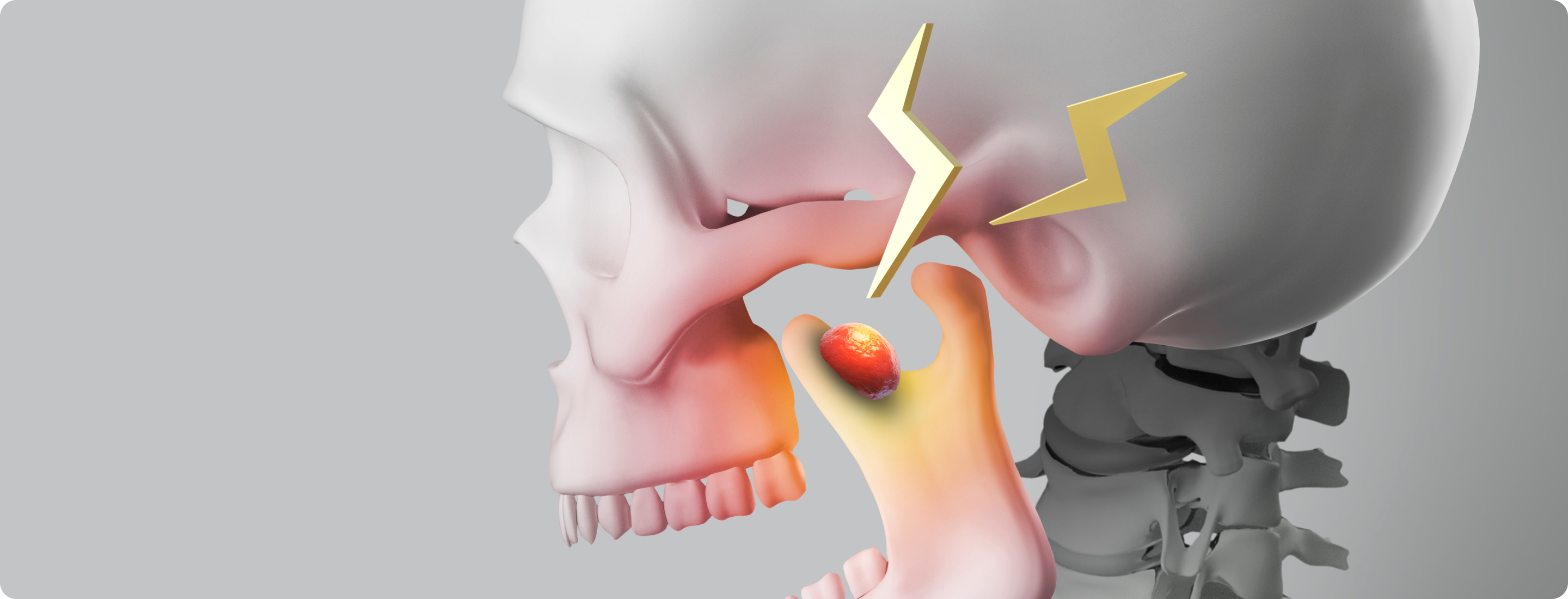
If jaw sounds, pain or difficulty opening your mouth
keep coming back,
a proper examination of the jaw joint and
surrounding muscles is needed.

A clicking jaw that causes no pain, no limited opening
and no trouble in daily life
does not necessarily need treatment.
However, if the sound comes with pain, a jaw that catches,
or repeated difficulty opening your mouth,
the joint and its disc should be examined.
Rather than a single cause,
several factors often act together

Grinding during sleep or habitually clenching the teeth
puts repeated strain on the jaw joint and surrounding muscles.
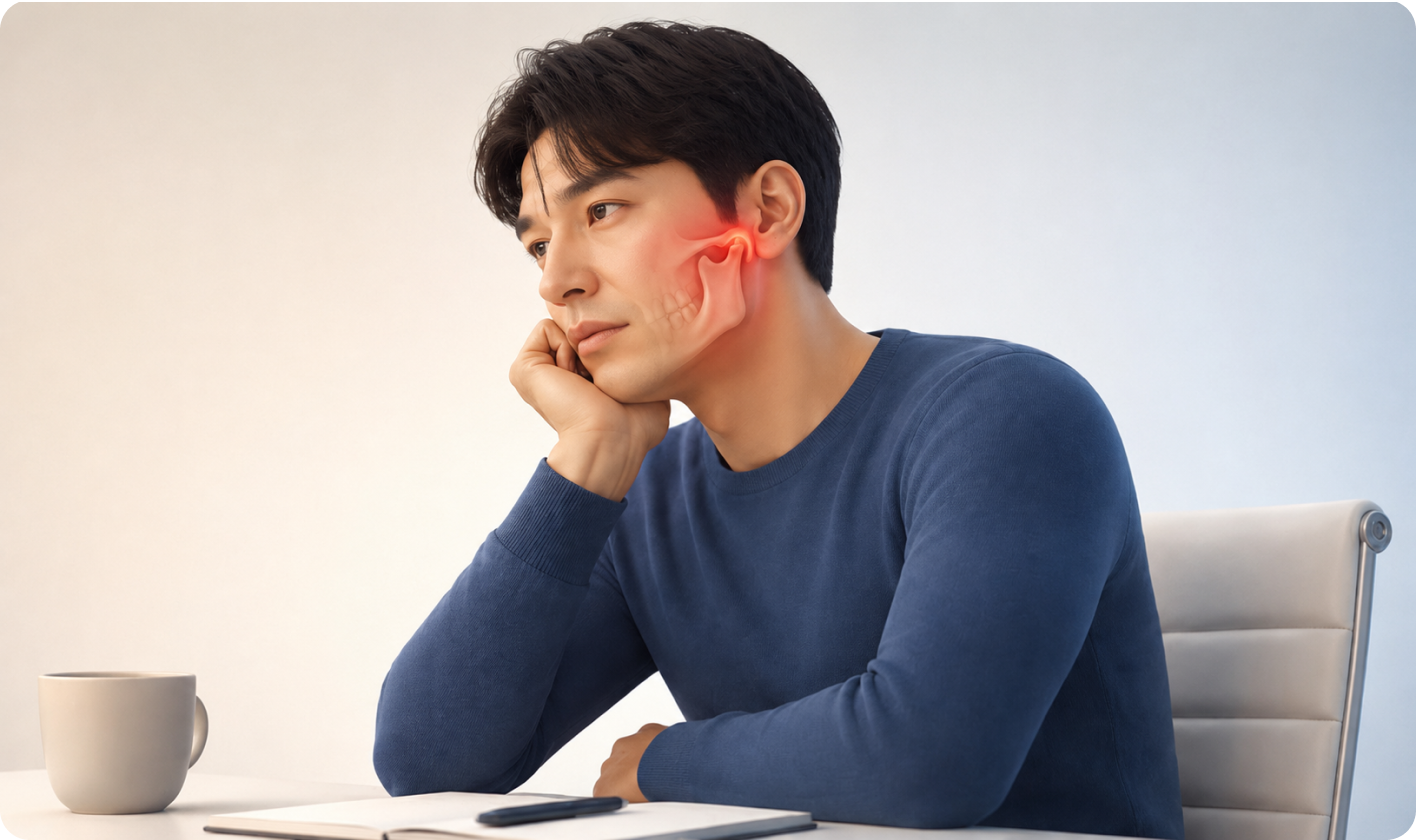
Resting your chin on your hand, chewing on one side only, nail biting and gum chewing
keep the jaw joint in constant use.

Under stress, people unconsciously clench their teeth or tense the muscles
around the jaw and face, which can make the pain worse.
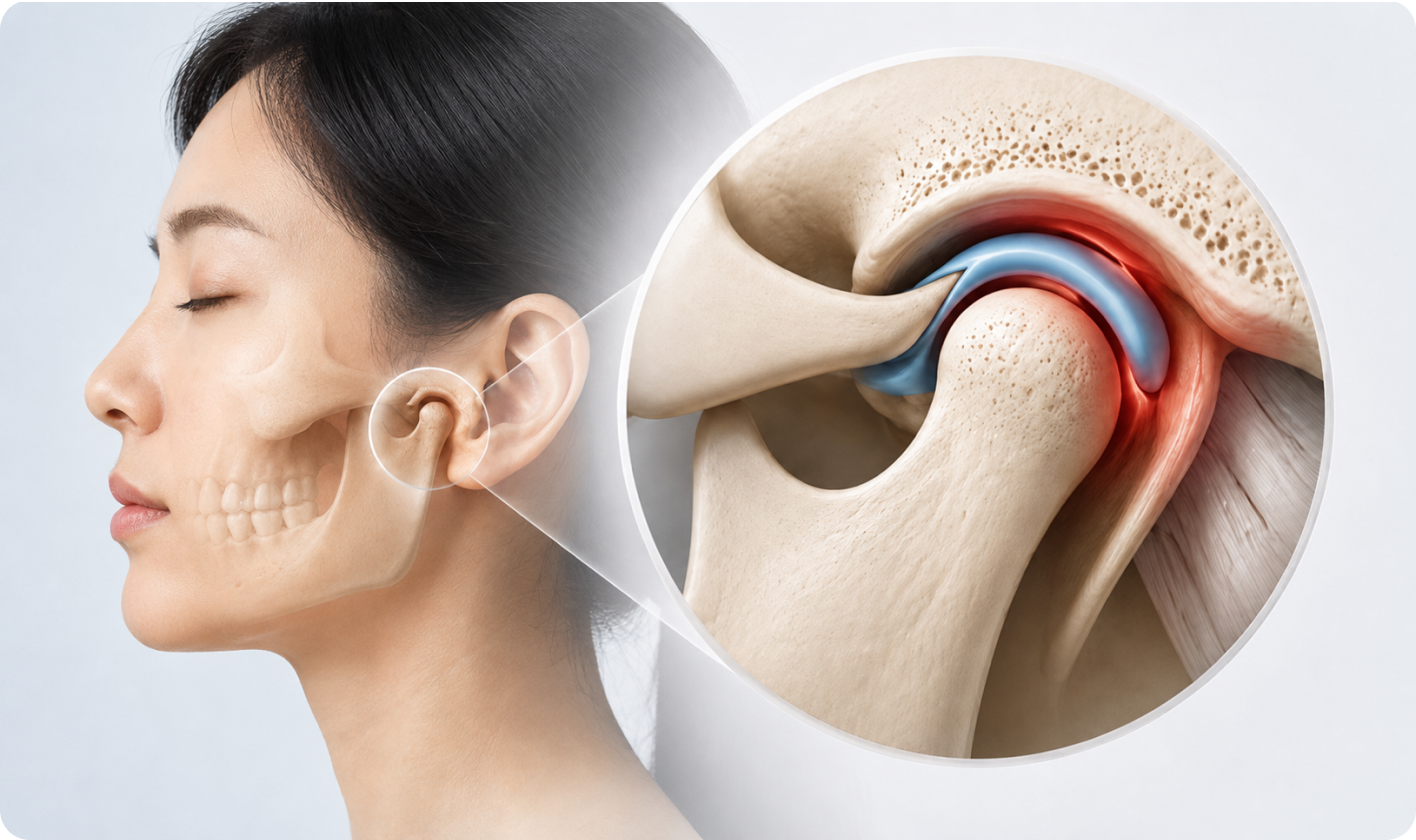
Injury, a shift in the position of the articular disc, or degenerative and inflammatory changes in the joint
can bring on TMJ symptoms.
TMJ treatment varies with how long the symptoms have lasted, their cause,
and the condition of the joint and bite.
Early on, habit changes and conservative care come first;
for chronic cases, treatment proceeds in stages based on a detailed diagnosis.
Stress and harmful daily habits

Habit correction and exercise therapy
Medication: oral medication, Botox
Physical therapy: infrared, laser
Repeated harmful habits and a mismatch between the jaw joint and the bite
Manual therapy: spray-and-stretch, joint mobilization
Appliance therapy: splint, traction, grinding treatment
Orthodontics: collaborative care with an orthodontic specialist
From habit changes to medication, physical therapy and appliances,
we identify the cause of the pain and the condition of the joint and apply
the treatment that is needed, step by step.

We correct habits that strain the jaw joint, such as resting your chin on your hand, chewing on one side and clenching.
Warm compresses and jaw exercises help relax tense muscles and restore natural movement.
Depending on the pain, inflammation and muscle tension, we prescribe pain relievers, anti-inflammatories or muscle relaxants.
The type of medication and how long it is taken are adjusted as we monitor your overall condition and symptom changes.
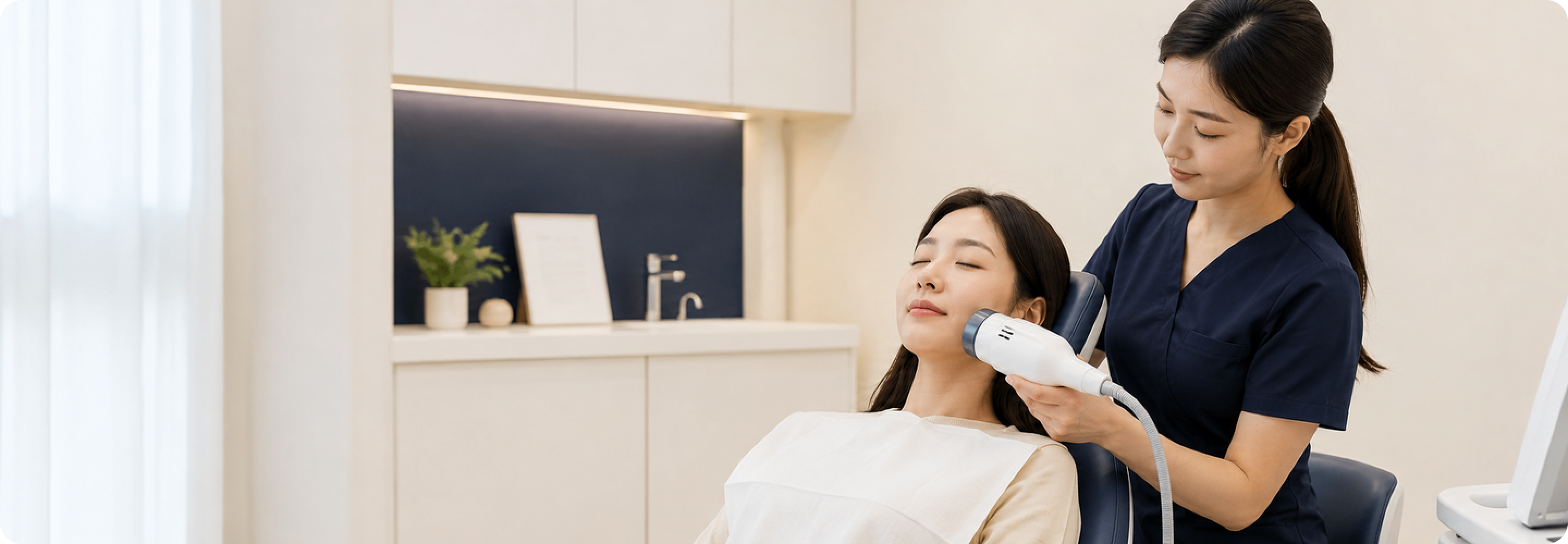
Heat therapy and low-level laser are used to relax the tense muscles around the jaw joint.
This helps reduce pain and restore restricted jaw movement.
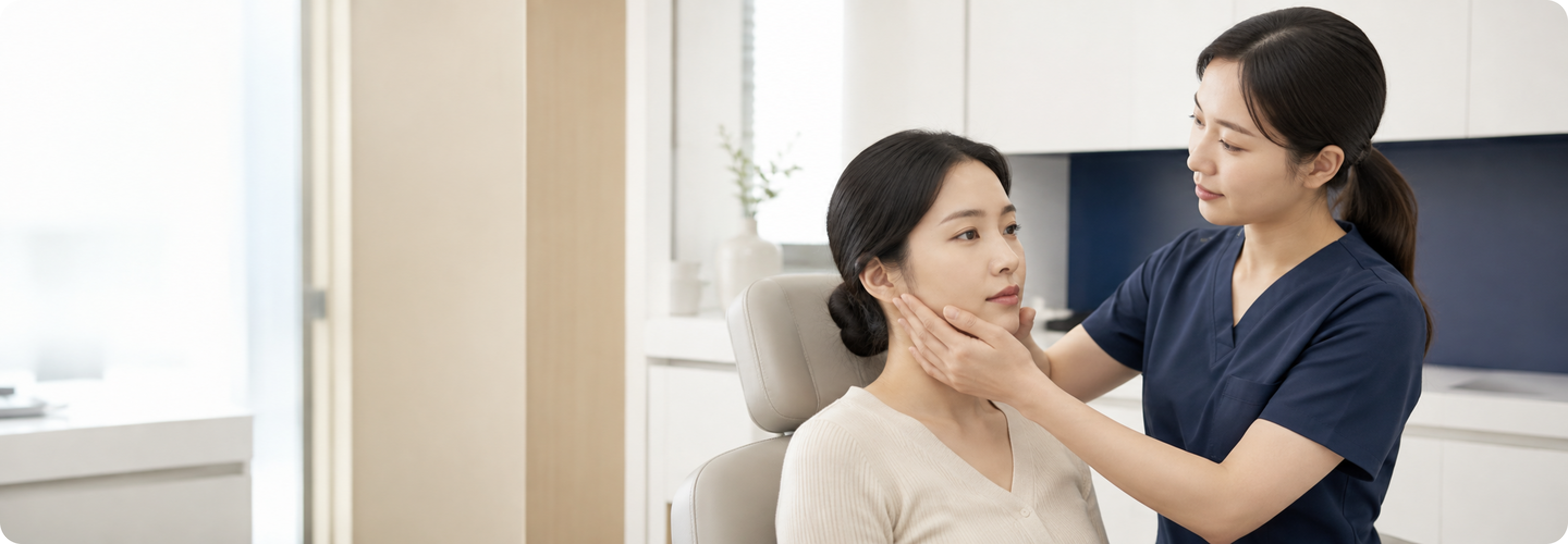
After assessing the jaw joint and chewing muscles, we use hands-on techniques to gently release stiff muscles and soft tissue.
This reduces the tension that hinders jaw movement and supports natural joint motion.
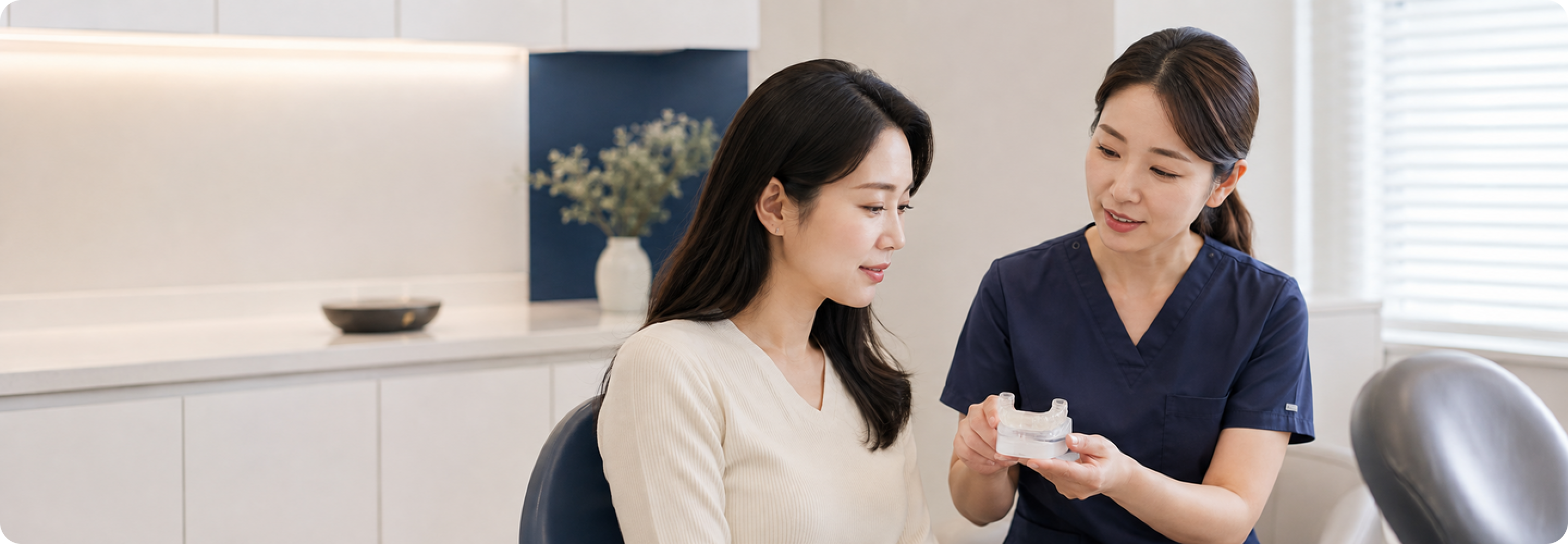
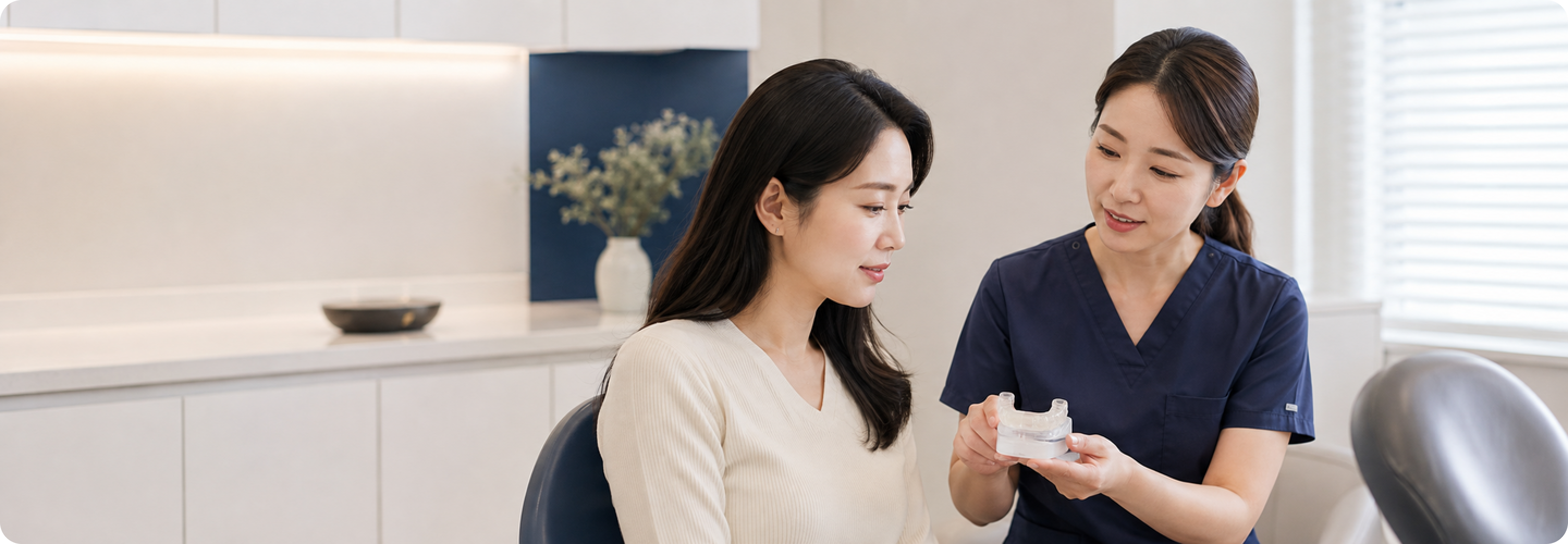
An intraoral appliance such as a splint is made to fit your teeth and bite.
It helps reduce the load that grinding and clenching place on the teeth and jaw joint.
Browse the questions patients most often ask
before visiting Seoul Standard Dental Clinic.
Symptoms caused by temporary muscle tension or overuse of the jaw can ease with rest and changes in daily habits.
If symptoms persist or keep coming back, the cause should be examined.
It depends on the cause, how long the symptoms have lasted and your daily habits.
During treatment we regularly check pain levels and mouth opening range and adjust the duration and method accordingly.
Not every patient who grinds needs one.
We check tooth wear, muscle tension and the condition of the jaw joint before deciding whether an appliance is appropriate.
The jaw joint and chewing muscles sit near the temples and ears, so the discomfort can feel like a headache or pain in front of the ear.
Similar symptoms can occur with other conditions, so an accurate diagnosis is needed.
Physical therapy for the jaw joint (ultrasound, low-level laser and similar) is covered by National Health Insurance.
Botox for the masseter and temporalis muscles and prolotherapy injections into the joint are non-covered; Botox (100 units) is KRW 300,000 (prices as of Aug 17, 2026, confirmed by the clinic director).
A splint is used when habit correction, medication and physical therapy have not brought improvement.
It is custom made to your teeth and bite; fabrication takes about 2 weeks and 2 visits, followed by periodic bite adjustments (confirmed by our director, Aug 2026).
A night guard, which blocks grinding forces at night, and a splint, which guides the joint position, are different appliances with different purposes.
Simple clicking without pain or limited opening is often something to monitor rather than treat.
That said, joint noise is not a normal finding that everyone has; it can be a sign that the disc has shifted (source: Korea Disease Control and Prevention Agency, National Health Information Portal, TMJ disorders).
If the sound changes to a grinding noise, your mouth opens less or catches, or pain develops, an evaluation is needed.
We look closely at each patient's condition
and honestly recommend only the treatment that is needed.
From diagnosis to aftercare,
we practice dentistry by the fundamentals.

Six dentists organized by specialty area provide care
from start to finish within a structured system.

Comfort anesthesia and sedation dentistry
help reduce the pain and fear of dental treatment.
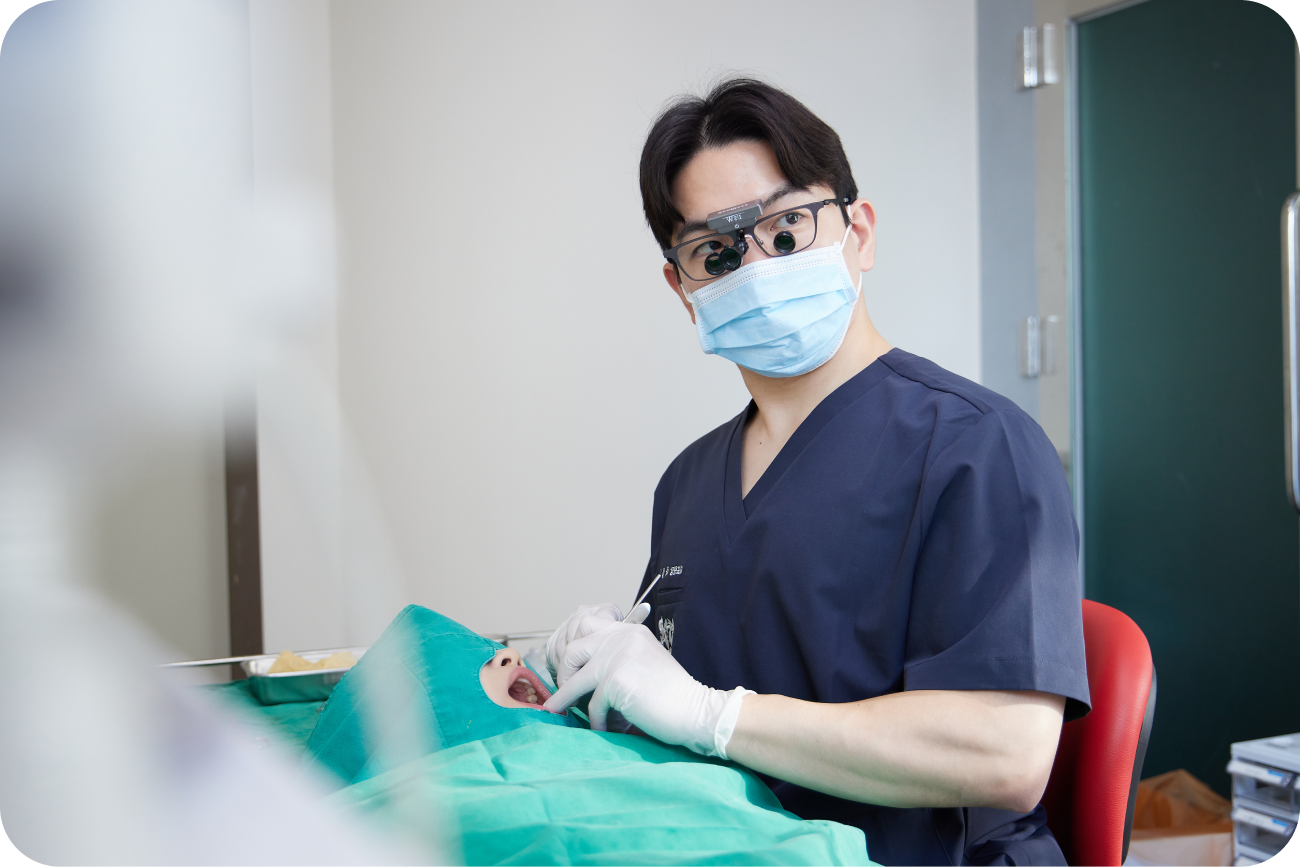
Drawing on more than 20,000 treatments,
we practice dentistry by the standard across a wide range of fields.
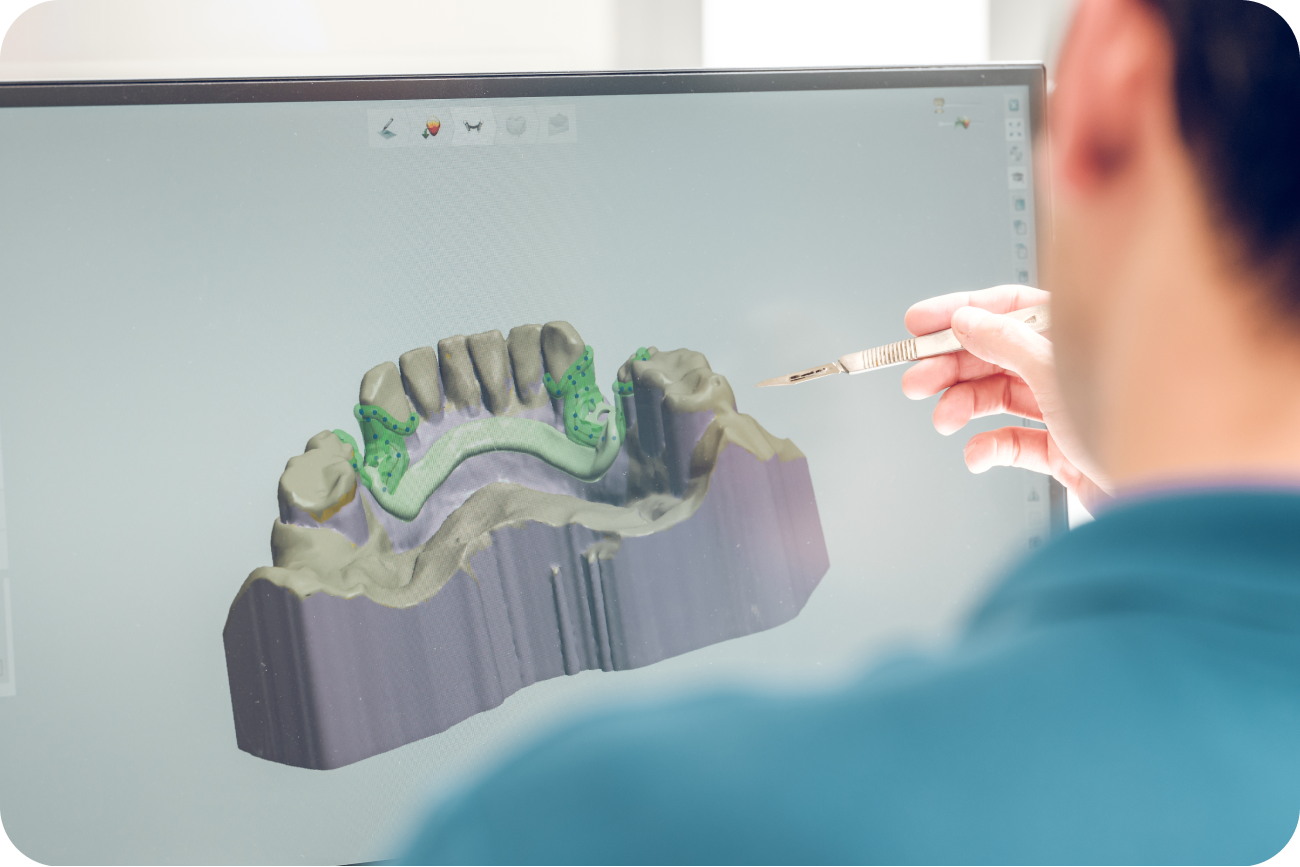
Digital diagnostic and monitoring equipment lets us examine each patient closely
and deliver more accurate, stable care.
Seoul Standard Dental Clinic has evening hours
until 8:30 PM on Tuesdays and Thursdays.




+82-42-823-2279

4F, 511-7 Doan-daero, Yuseong-gu, Daejeon, South Korea
(474-3 Sangdae-dong)

Underground parking in the building (limited space)
Doan public parking lot behind the building (parking fee covered for the length of your visit)

9:30 AM to 6:30 PM
9:30 AM to 8:30 PM
Evening hours
9:30 AM to 2:00 PM
12:30 to 2:00 PM
*Saturday: open through lunch
*Closed Sundays and public holidays
*Last check-in is 30 minutes before closing


