

BONE GRAFT IMPLANT
Bone Graft Implants
We go beyond simply placing an implant
and consider the jawbone environment that lets it last.
Bone Graft Implants in Daejeon | Seoul Standard Dental Clinic
You are viewing the English website of
Seoul Standard Dental Clinic.




We go beyond simply placing an implant
and consider the jawbone environment that lets it last.
For an implant to function reliably over the long term,
it needs jawbone of sufficient width and height.
When tooth loss or periodontal disease has
reduced the jawbone,
bone must be added where needed
to create an environment that can
hold the implant firmly.

When a tooth has been missing for an extended period,
the jawbone in that area can gradually resorb.
As periodontal disease progresses, the jawbone
that supported the tooth can be damaged along with it.
If infection has damaged the bone at the extraction site,
there may not be enough bone to support an implant.
The jawbone may be too narrow from side to side
to place an implant securely.
When there is not enough bone between the upper back teeth and the sinus,
a sinus lift and bone graft may be needed.
If there is a bone defect where a previous implant was removed,
the jawbone may need to be rebuilt before a new implant is placed.
The right treatment depends on where and how much
jawbone is missing.
We use 3D CT to measure bone width and height and locate the sinus,
then
choose the bone graft method that fits
the patient's bone loss.
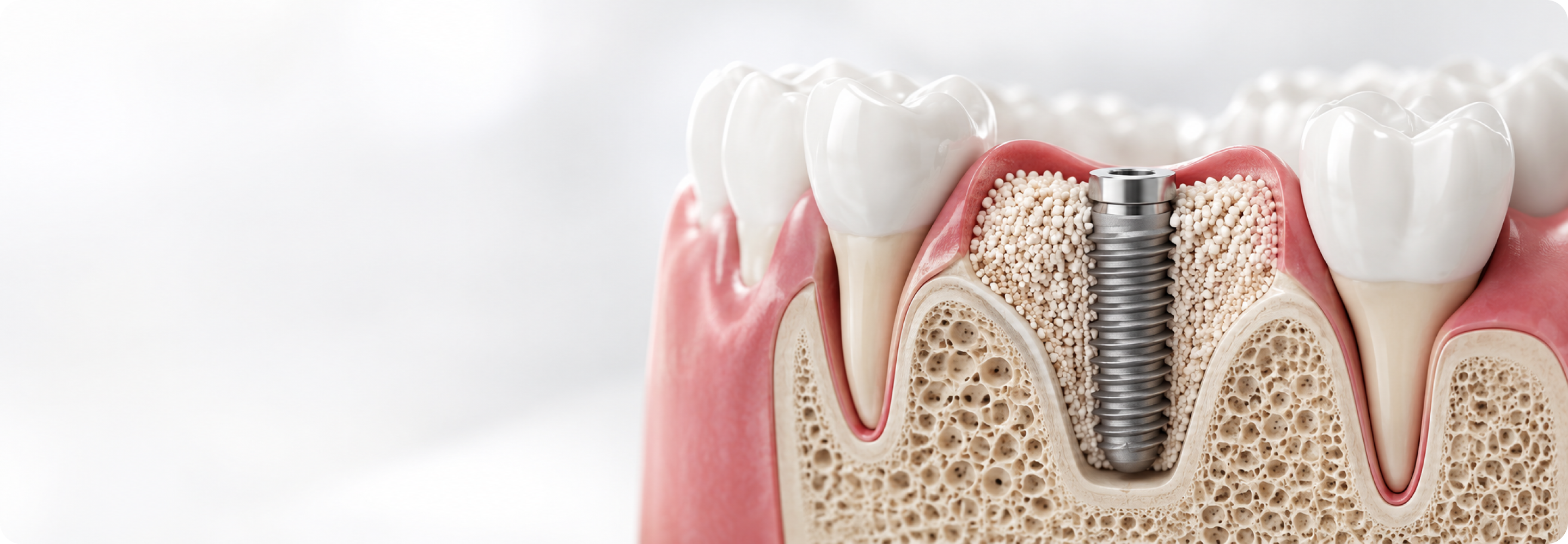
When jawbone is lacking in a limited, localized area,
bone is added only where needed to create a stable foundation for the implant.
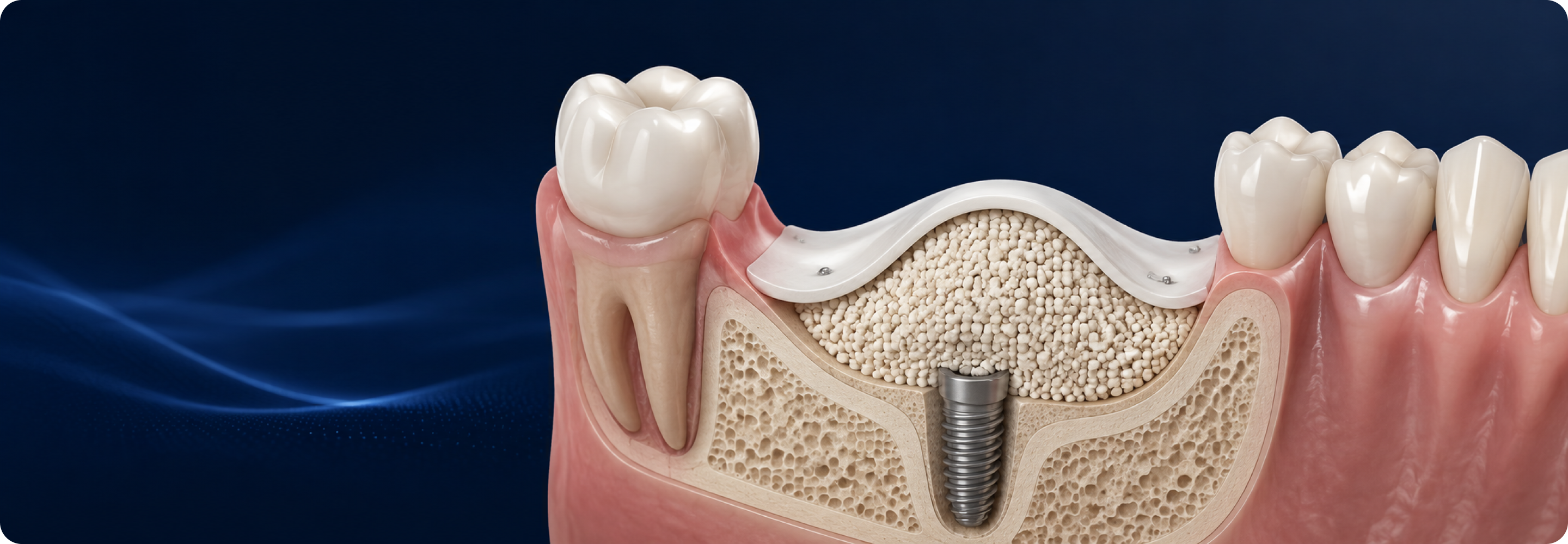
When jawbone width or height is significantly lacking, bone graft material and a barrier membrane are used to rebuild the required bone volume.
Based on a detailed diagnosis, this creates the foundation needed for implant placement.
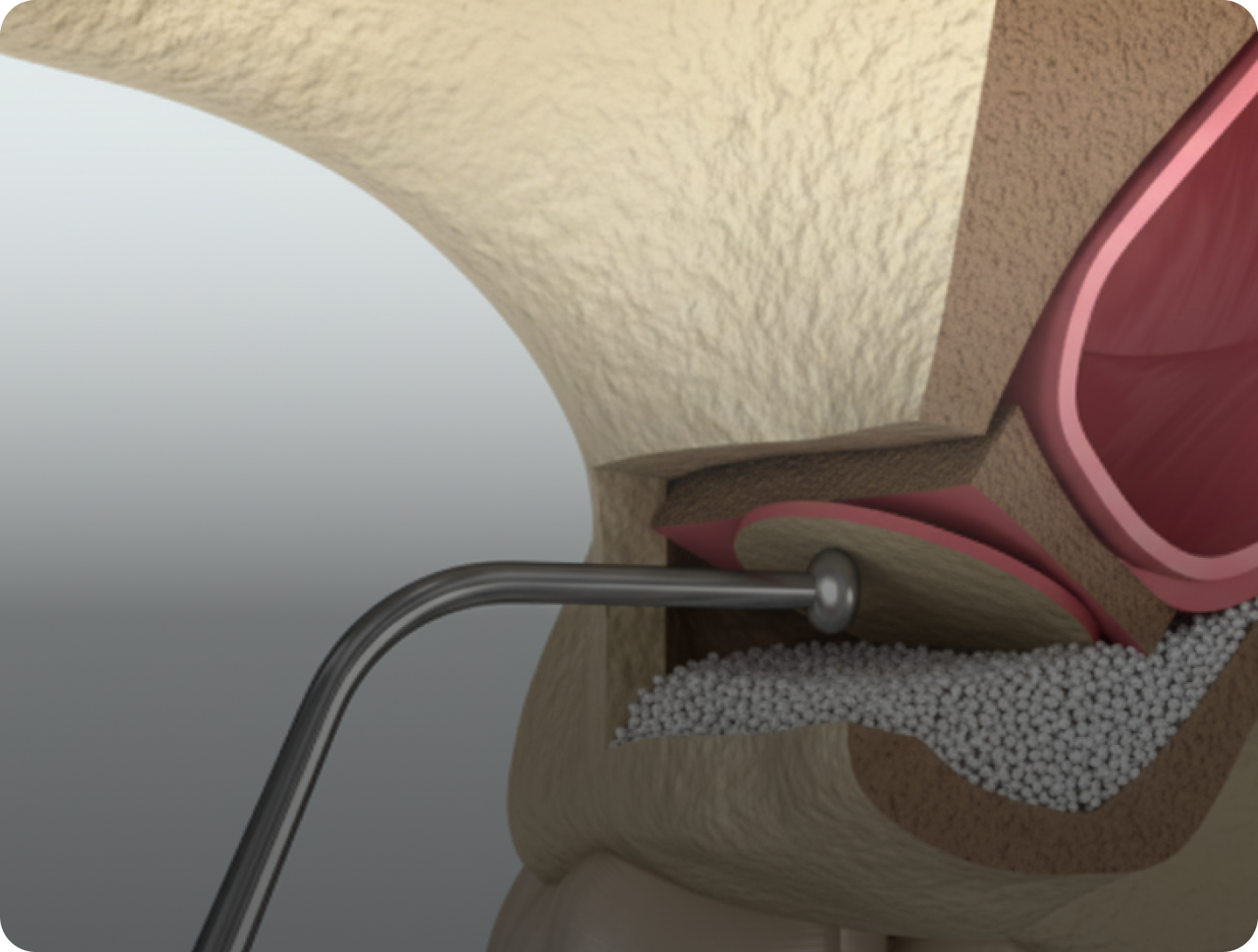
The surgery is done through the side of the gum under direct view,
so it can be performed even when a large amount of bone is missing.
Because a larger area of gum is opened, there may be some discomfort,
and great care is needed to avoid damaging the thin membrane.
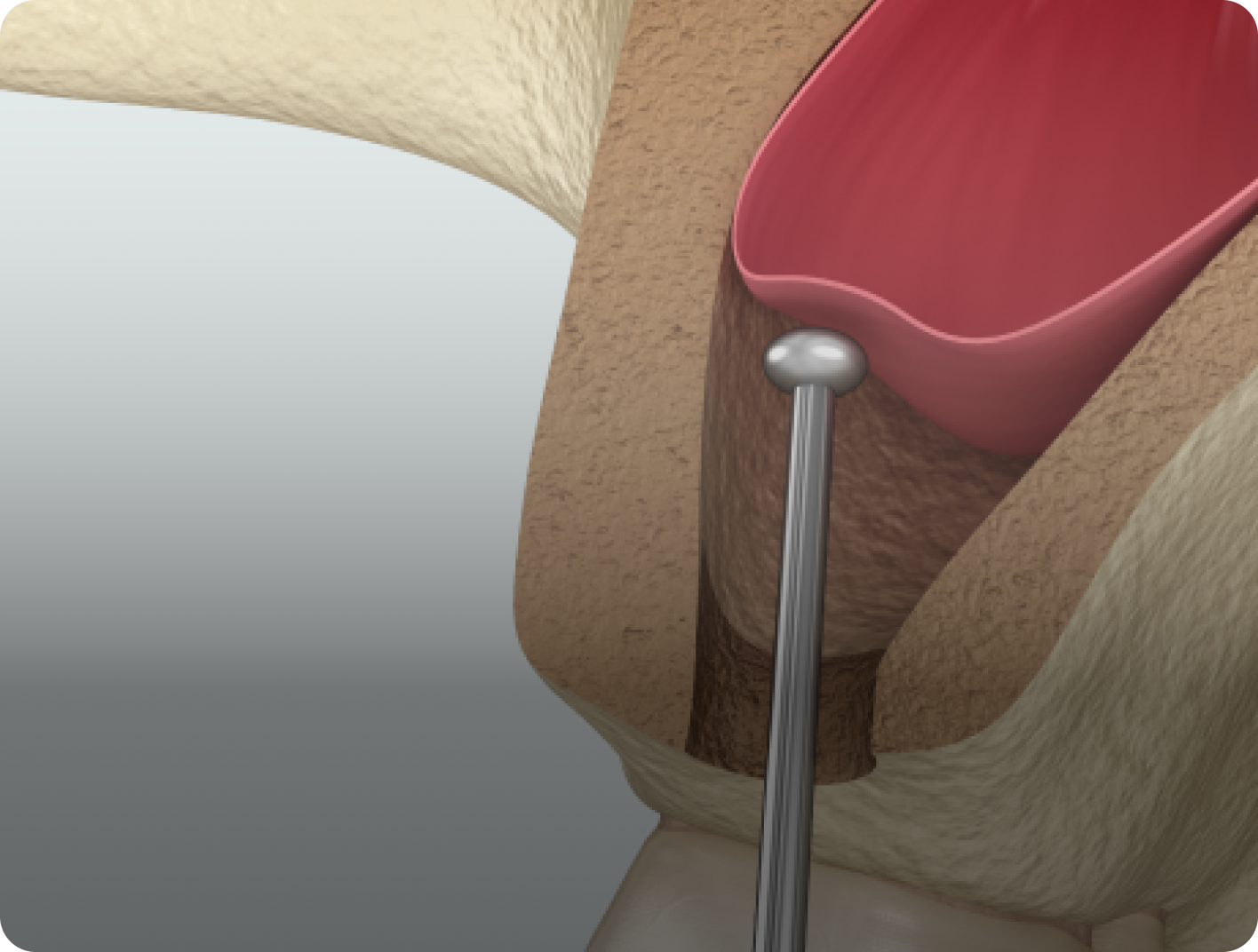
The surgery is done through the implant drill hole, so the wound is small,
and because the membrane is not handled directly, there is less discomfort and risk.
However, it is only possible when a certain amount of bone remains,
and it calls for a highly precise and experienced technique.
When bone height in the upper back jaw is insufficient, the sinus membrane is carefully lifted and bone graft material is placed to build up bone.
Based on a detailed diagnosis, this treatment creates a stable foundation for implant placement.
Answers to the questions patients ask most often
before visiting Seoul Standard Dental Clinic.
No. If the jawbone has enough width and height to support the implant, the implant can be placed without a bone graft.
We check bone volume and the extent of bone loss on a 3D CT scan before deciding whether a graft is needed.
Yes, if the remaining jawbone can hold the implant firmly in place.
When bone loss is extensive or initial stability is hard to achieve, the bone graft is done first, followed by a healing period, and the implant is placed afterward.
Several types of graft material are used, including autogenous bone (the patient's own bone), allograft, xenograft and synthetic bone.
The material, or a combination of materials, is chosen based on the amount and location of missing bone and the patient's general health.
It depends on the extent and location of the graft and how quickly the patient heals.
The timeline differs depending on whether the implant is placed at the same time as the graft or after the bone has healed, so an estimated schedule is provided after a detailed examination.
Per tooth, a simple bone graft is KRW 300,000 and a complex bone graft is KRW 500,000. A sinus lift is KRW 500,000 with the crestal approach and KRW 1,000,000 with the lateral approach (prices as of 2026-08-17, confirmed by the director).
Bone grafts and sinus lifts are not covered by National Health Insurance, even for patients aged 65 and over who qualify for insurance-covered implants, and are paid separately (source: National Health Insurance Service guide to dental implant coverage).
A simple bone graft fills the gap between the extraction socket and the implant with graft material.
A complex bone graft is needed when the bone is too narrow or needs to be built up in height, which requires precise planning of the gum incision design and tissue tension.
Cases that require lifting the sinus because of insufficient remaining bone, and cases with low bone density, are planned separately (confirmed by the director, August 2026).
Above the upper back teeth lies an air-filled cavity called the maxillary sinus. When bone resorbs after an extraction, there may not be enough height left to place an implant.
A sinus lift raises the membrane at the floor of the sinus and places graft material beneath it to gain bone height. Whether it is needed is determined by the remaining bone height on a 3D CT scan.
We examine each patient carefully
and honestly recommend only the treatment that is needed.
From diagnosis to aftercare,
we practice dentistry grounded in fundamentals and principles.

Our 6 dentists, organized by specialty, work within a structured system
and take responsibility for your care from start to finish.

Our comfort anesthesia and sedation systems
help reduce the pain and anxiety of dental treatment.
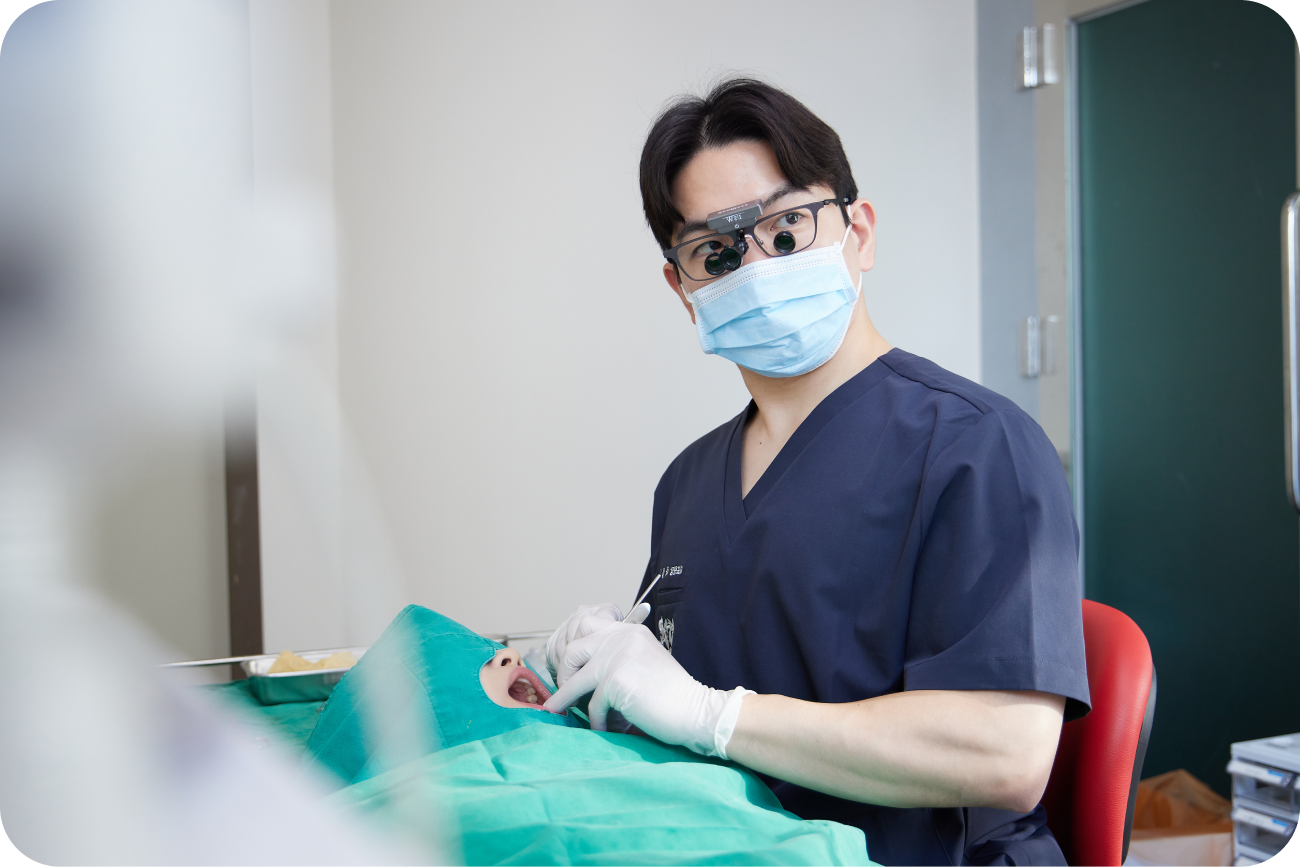
With more than 20,000 treatments performed,
we continue to practice by-the-book dentistry across a wide range of procedures.
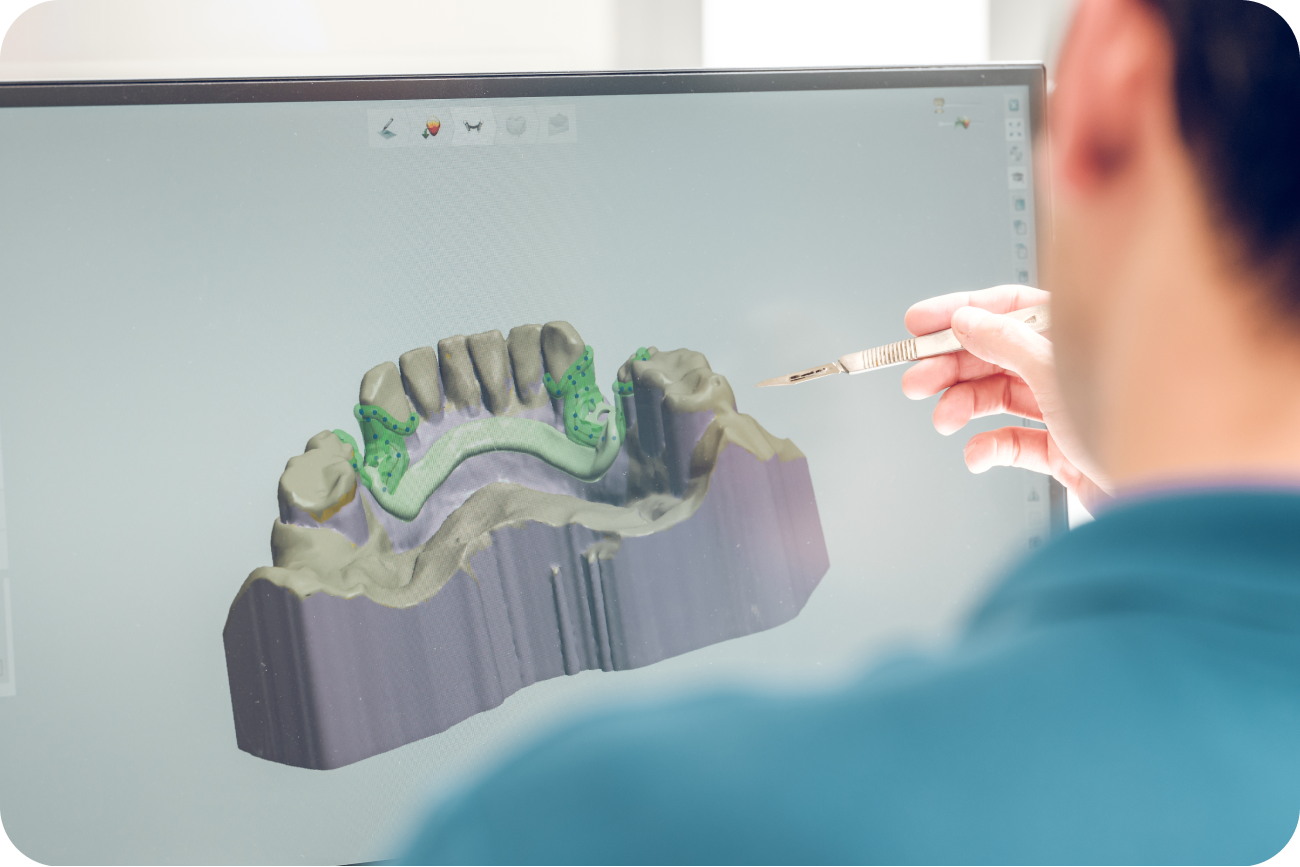
Digital diagnostic and monitoring equipment lets us assess each patient in detail
and deliver more accurate, consistent care.
Seoul Standard Dental Clinic has evening hours
until 8:30 PM on Tuesdays and Thursdays.




+82-42-823-2279

4F, 511-7 Doan-daero, Yuseong-gu, Daejeon, South Korea
(474-3 Sangdae-dong)

Underground parking in the building (limited space)
Doan public parking lot behind the building (parking fee covered for the length of your visit)

9:30 AM to 6:30 PM
9:30 AM to 8:30 PM
Evening hours
9:30 AM to 2:00 PM
12:30 to 2:00 PM
*Saturday: open through lunch
*Closed Sundays and public holidays
*Last check-in is 30 minutes before closing


